
How Climate Shapes Street Food in Northern China
- Date:
- Views:259
- Source:The Silk Road Echo
If you've ever wandered the frosty streets of Harbin in winter or strolled through Beijing's hutongs under a crisp autumn sky, you know one thing for sure: northern China doesn't just serve food—it serves warmth, soul, and survival. And that's no accident. The region's harsh, dry winters and short growing seasons have cooked up a street food culture as hearty as it is delicious.
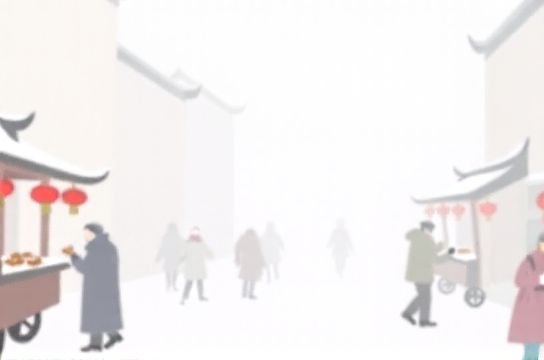
Let’s talk climate first. Northern China sits above the Qinling-Huai River line—geographically dividing north from south—with long, freezing winters (often below -15°C) and less rainfall. This means fresh produce? Not year-round. So what do people do? They turn to carbs, fats, and preservation. Think dumplings, buns, grilled meats, and fermented flavors—all engineered not just for taste, but for staying power and heat retention.
The Science of Cold-Weather Eating
Cold climates demand high-calorie intake. According to China's National Health Commission, average daily energy needs in northern provinces like Heilongjiang are about 10–15% higher than in Guangdong or Fujian. That’s where street staples come in:
- Jianbing – the crispy crepe loaded with eggs, sauces, and fried crackers. Clocks in at ~450 kcal.
- Baozi – steamed buns stuffed with pork, cabbage, or even red bean. One big bun? Around 280 kcal.
- Chuan’r (skewers) – lamb, grilled over charcoal with cumin and chili. High-fat, high-protein—perfect for thermogenesis.
These aren’t just snacks—they’re fuel.
Climate vs. Crop Yields: A Flavor Shift
Northern soil and weather favor wheat over rice. Why? Wheat thrives in cooler temps and drier conditions. As a result, noodles and dough rule the street scene.
| Food Item | Main Ingredient | Region Popularity | Avg. Winter Temp (°C) |
|---|---|---|---|
| Jiaozi (Dumplings) | Wheat flour + pork/veg | Northeast, Beijing | -10 to -20 |
| Liangpi (Cold Skin Noodles) | Wheat starch | Shaanxi | -5 to 5 |
| Roujiamo (Meat Burger) | Flatbread + stewed pork | Shaanxi | -3 to 6 |
| Yangrou Paomo (Lamb & Crumbled Bread) | Wheat bread + lamb broth | Xi'an | 0 to 8 |
Notice a pattern? Wheat-based, brothy, filling. Even dishes with 'cold' in the name—like Liangpi—are often served warm in winter. Adaptation at its finest.
Pickling, Fermenting, Surviving
No fresh greens in January? No problem. Northerners pickle daikon, cabbage (hello, suan cai!), and cucumbers. Fermentation isn’t just flavor—it’s food security. Sichuan may love spice, but the north leans on sour and umami to punch through winter blandness.
In Harbin, you’ll find guo bao rou—sweet-sour pork—not just because it tastes good, but because vinegar helps preserve food and stimulates appetite in cold months. Smart cooking? Absolutely.
Street Vendors: Masters of Thermal Efficiency
Watch a vendor in Shenyang grill skewers under a propane flame, wrap baozi in cloth to retain steam, or ladle boiling soup into bowls. Every move is thermal strategy. Open-air stalls thrive because hot food = instant comfort when wind chill bites.
And let’s be real—eating jianbing with numb fingers in -18°C? Worth it. That first bite of crispy, eggy, savory goodness hits different when your breath is fogging the air.
Final Bite
Northern Chinese street food isn’t just about hunger. It’s a direct response to climate—engineered for warmth, endurance, and deep, carb-loaded joy. From dumplings to dry-spiced skewers, every bite tells a story of resilience, resourcefulness, and flavor forged by frost.
So next time you’re shivering under a wool hat in Beijing, grab a steaming bao. You’re not just eating—you’re surviving. Deliciously.