
Understanding China Through Its Daily Habits
- Date:
- Views:259
- Source:The Silk Road Echo
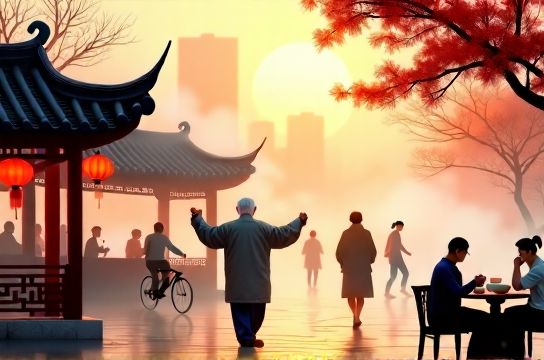
If you've ever wandered through a Chinese city at 6 a.m., you’ve probably seen it: grandmas twirling in synchronized tai chi, uncles blasting opera from pocket radios, and street vendors already serving steaming bowls of congee. These aren’t just random scenes — they’re snapshots of a culture rooted in rhythm, routine, and ritual. Welcome to the daily life of China, where tradition dances with modernity every single day.
The Early Rhythm: Mornings Like Clockwork
In cities like Beijing and Shanghai, mornings start early — often before sunrise. A 2023 survey by the National Bureau of Statistics found that 68% of urban workers begin their commute by 7:30 a.m., with many retirees already hours into their day. Why so early? Blame it on traffic, school schedules, and a cultural respect for diligence.
But before the hustle, there’s harmony. Public parks transform into wellness hubs, hosting group exercises ranging from tai chi to广场舞 (guǎngchǎng wǔ), or square dancing. These routines aren’t just for fitness — they’re social glue. One study in Guangzhou showed that 74% of participants cited 'emotional connection' as their main reason for joining.
Breakfast: Fuel With Flavor
No bland toast here. Chinese breakfasts are bold, savory, and deeply regional. In the north, you’ll find jianbing (a crispy crepe with egg and chili sauce); in the south, dim sum reigns supreme. The average breakfast costs between ¥3–10 (about $0.40–$1.40), making it one of the world’s most affordable morning meals.
| Region | Popular Breakfast | Key Ingredients | Avg. Price (¥) |
|---|---|---|---|
| Northern China | Jianbing | Egg, scallion, hoisin, crispy cracker | 8 |
| Southern China | Dim Sum (e.g., har gow) | Shrimp, bamboo, pork | 15 |
| Eastern China | Congee + Pickles | Rice, preserved vegetables | 5 |
Work & Study: The Grind is Real
China’s famous work ethic isn’t a myth. The standard workweek runs 9-to-6, five or six days a week — though some tech firms still flirt with the controversial '996' model (9 a.m.–9 p.m., 6 days). Meanwhile, students face intense academic pressure. According to UNESCO, Chinese high schoolers average 6.5 hours of homework weekly — nearly double the OECD average.
Evening Life: Family, Food, and WeChat
When the workday ends, families gather. Dinner is sacred. A 2022 Tencent report revealed that 81% of households eat together at least five nights a week. And yes — WeChat is everywhere. From splitting bills via red envelopes to sharing family videos, it’s not an app; it’s a lifestyle.
As night falls, another wave of dancers hits the squares, while young locals flock to bubble tea shops or LAN cafes. It’s a blend of old and new — where Confucian values coexist with K-pop playlists.
To understand China, don’t just visit the Great Wall. Walk through a wet market. Join a morning stretch. Sip soy milk from a street cart. Because the real China? It lives in the daily grind — and it’s beautiful.