
Tea Farmers and the Roots of Tea Culture China
- Date:
- Views:185
- Source:The Silk Road Echo
When you sip a warm cup of green tea, have you ever wondered about the hands that picked those delicate leaves? Behind every fragrant brew lies a story—centuries deep—of tea farmers, misty mountains, and traditions passed down like heirlooms. Welcome to the soul of Chinese tea culture, where nature, history, and human dedication blend as smoothly as your favorite oolong.
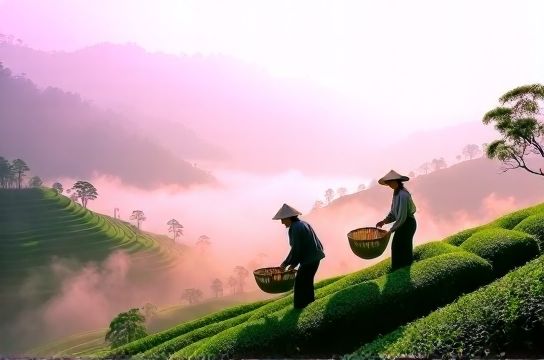
The Heartbeat of the Harvest: Who Are China’s Tea Farmers?
China is the birthplace of tea, with records dating back over 5,000 years. Today, more than 20 million people are involved in tea cultivation across provinces like Fujian, Yunnan, Zhejiang, and Sichuan. These aren’t factory workers—they’re artisans. Most tea farming is still done by hand, from plucking tender buds at dawn to sun-drying leaves on bamboo mats.
Take Xinyang Maojian, for example. This famous green tea from Henan Province requires picking only the top two leaves and a bud—each one selected with care. It takes about 45,000 individual shoots to make just one kilogram of finished tea!
Tea Regions & Their Signature Brews
China’s diverse climate creates perfect conditions for different tea types. Here's a snapshot of key regions and what they're known for:
| Region | Tea Type | Famous For | Harvest Season |
|---|---|---|---|
| Fujian | Oolong (e.g., Tieguanyin) | Complex floral notes, semi-oxidized | Spring & Autumn |
| Yunnan | Pu’er | Aged fermentation, earthy depth | Year-round |
| Zhejiang | Longjing (Dragon Well) | Sweet, nutty green tea | Early Spring (Pre-Qingming) |
| Anhui | Keemun Black Tea | Wine-like aroma, used in English Breakfast blends | Late Spring |
Culture Steeped in Tradition
Tea isn’t just a drink in China—it’s philosophy in liquid form. The ancient Tea Ceremony, or Gongfu Cha, celebrates mindfulness and connection. But long before rituals in teahouses, it was farmers who first honored the plant—praying to tea gods, celebrating harvest festivals, and treating each bush like a living ancestor.
In Pu’er, some tea trees are over 1,000 years old. Locals call them ‘wild arbor trees,’ and their leaves fetch premium prices because of their depth of flavor and cultural significance.
Challenges Brewing Beneath the Surface
Despite their vital role, many small-scale tea farmers struggle. Climate change brings unpredictable rains; younger generations move to cities; and mass-produced teas undercut traditional craftsmanship. A farmer might earn as little as $0.50 per pound of raw leaf, while luxury brands resell it for $100+ per ounce.
Yet hope is brewing. Movements toward direct-trade tea and organic certification are helping farmers gain fair pay and global recognition. Some even host ‘tea tourism’ experiences, inviting travelers to pick leaves, roast tea, and taste authenticity straight from the source.
Sip With Purpose: How You Can Honor the Craft
- Buy directly from farms or ethical brands – Look for traceable origins.
- Try seasonal, single-origin teas – Taste the terroir.
- Learn the names behind the leaves – A farmer’s story adds flavor.
Next time you steep a cup, remember: you’re not just drinking tea. You’re holding centuries of wisdom, one leaf at a time.