
How Seasonal Changes Affect Local Markets China
- Date:
- Views:217
- Source:The Silk Road Echo
If you've ever wandered through a bustling street market in Beijing in winter or strolled through a tropical fruit bazaar in Guangzhou during summer, you've probably noticed something: the goods change with the seasons. But it's not just about what's fresh—it's about how seasonal changes affect local markets in China on economic, cultural, and logistical levels.
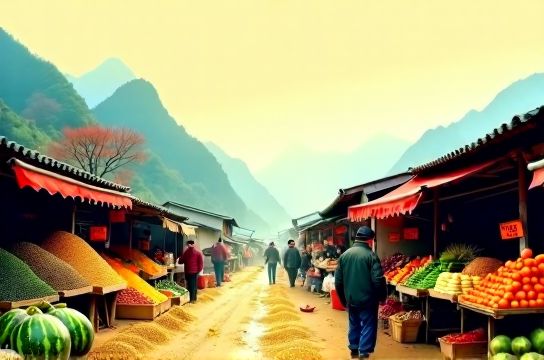
China’s vast geography—from freezing northern plains to humid southern coasts—means seasonal shifts dramatically influence supply, demand, pricing, and consumer behavior. Let’s dive into how weather patterns reshape local economies across the country.
The Rhythm of the Seasons: Supply & Availability
In spring (March–May), markets burst with tender greens like bok choy and spinach. This is harvest time for early vegetables in provinces like Shandong and Jiangsu. Meanwhile, autumn (September–November) brings apples from Shaanxi and pears from Hebei. Winter sees stored root vegetables dominate, while summer (June–August) overflows with watermelons, lychees, and dragon fruit.
Agricultural cycles directly impact availability. For example, over 70% of China’s leafy greens are produced between April and September, according to the Ministry of Agriculture. When out of season, prices can spike by 40–60% due to reliance on greenhouses or long-haul transport.
Price Fluctuations Across the Year
Seasonality doesn’t just change what’s on display—it changes what you pay. Take Chinese cabbage: in peak season (autumn), it sells for as low as ¥1.5/kg. In deep winter? Prices jump to ¥3.5/kg in northern cities due to heating costs and transportation challenges.
Here’s a snapshot of average price variations for common produce:
| Product | Low-Season Price (¥/kg) | High-Season Price (¥/kg) | Peak Season |
|---|---|---|---|
| Chinese Cabbage | 1.5 | 3.5 | Autumn |
| Lychee | 25 | 12 | Summer |
| Garlic | 8 | 18 | Winter |
| Watermelon | 2 | 6 | Summer |
As the table shows, timing matters—both for vendors and shoppers.
Cultural Festivals Drive Demand
It’s not all about weather. Traditional festivals amplify seasonal trends. During Spring Festival (Chinese New Year), markets overflow with oranges, fish, and niangao (sticky cake)—symbolic foods for luck and prosperity. Sales of festive goods surge by up to 200% in January and February.
Likewise, the Mid-Autumn Festival boosts mooncake sales, while Dragon Boat Festival spikes demand for zongzi (rice dumplings). These aren’t just cultural moments—they’re economic pulses that local vendors prepare for months in advance.
Climate Challenges & Market Adaptation
Rising temperatures and extreme weather are shaking things up. In 2023, floods in Henan disrupted vegetable supplies, causing short-term price hikes nationwide. In response, many urban markets are turning to climate-resilient farming and cold-chain logistics to stabilize inventory.
Cities like Shanghai now rely on smart agriculture hubs that use hydroponics and AI-driven climate control to grow off-season produce—helping smooth out supply curves.
What This Means for Travelers & Entrepreneurs
For travelers, visiting local markets offers a delicious way to experience seasonal culture. Want sweet lychees? Head to Guangdong in June. Craving crisp apples? Hit Shaanxi in October.
For entrepreneurs, understanding these cycles opens business opportunities—whether launching a seasonal pop-up stall or optimizing e-commerce inventory based on regional harvest calendars.
In short, seasonal changes in China don’t just shift the weather—they reshape entire market ecosystems. By tuning into these rhythms, you gain more than savings; you connect with the heartbeat of local life.