
From Farm to Table in Chinese Rural Daily Life
- Date:
- Views:205
- Source:The Silk Road Echo
Ever wondered how your morning bowl of rice or that fresh plate of bok choy made its way to your table? Let’s take a walk through the lush paddies and humble farmyards of rural China, where life moves with the seasons and every meal tells a story of soil, sweat, and tradition.
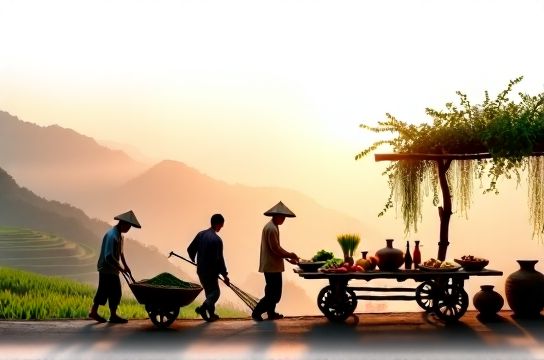
In villages across provinces like Yunnan, Sichuan, and Hunan, farming isn’t just a job—it’s a way of life. Over 500 million people still live in rural China, and many rely on small-scale agriculture for both sustenance and income. From sunrise plowing to moonlight harvesting, the journey from farm to table is deeply personal and profoundly sustainable.
Farming here is mostly done by hand or with simple tools. Families grow a mix of rice, vegetables, and livestock—think free-range chickens pecking near bamboo huts and pigs fed on kitchen scraps. Crop rotation and natural fertilizers (yes, that means pig manure!) keep the soil rich without relying on harsh chemicals.
Here’s a snapshot of a typical small family farm in southern China:
| Crop/Livestock | Annual Yield | Used For | Harvest Season |
|---|---|---|---|
| Rice | 4,500 kg/ha | Family meals, local market | Sept–Oct |
| Bok Choy | 12,000 kg/ha | Daily cooking, barter | Spring & Fall |
| Free-range Eggs | 300 eggs/hen/year | Home use, village trade | Year-round |
| Pork (1 pig) | ~75 kg meat | Festivals, winter stock | Lunar New Year |
What’s beautiful is how little gets wasted. Vegetable peels become pig feed. Rice straw becomes fuel or roofing material. Even human waste—carefully composted—is returned to the fields. This closed-loop system has sustained families for generations.
Markets are the heartbeat of rural food culture. Every few days, farmers pack their carts with just-picked produce and head to the weekly market. No plastic packaging, no food miles—just baskets of vibrant greens, homemade tofu, and steaming buns sold directly to neighbors.
But change is brewing. Younger generations are moving to cities, and aging farmers worry who will carry on the work. Still, there’s hope. Programs promoting eco-farming and rural tourism are helping villages thrive. Some even ship organic vegetables straight to urban customers via e-commerce—bridging the gap between farm and city table.
So next time you eat a simple Chinese meal, pause and picture the hands that grew it. In a world obsessed with speed and scale, rural China reminds us that good food starts with patience, respect, and a deep connection to the land.