
Wenzhou’s Entrepreneurial Spirit in Street Commerce
- Date:
- Views:193
- Source:The Silk Road Echo
If you've ever wandered through the bustling lanes of Wenzhou at dawn, you'd know—it's not just the scent of steamed buns and sizzling skewers that fills the air. It's ambition. Raw, unfiltered, and boiling over. Welcome to Wenzhou, China’s underground capital of street-level hustle, where every noodle vendor is a CEO and every cart is a startup.
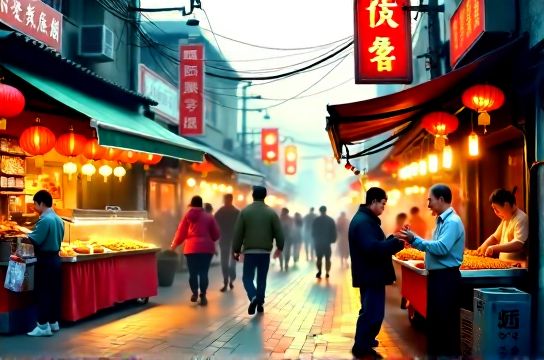
The DNA of a Hustler: Why Wenzhou?
Let’s get one thing straight: Wenzhou isn’t famous for skyscrapers or tech parks. It’s famous for people who build empires from scratch. With over 2.3 million private enterprises (yes, that’s nearly 1 for every 3 residents), Wenzhou has earned its nickname: “China’s Silicon Valley of Small Business.” But unlike Silicon Valley, here, innovation happens on sidewalks.
According to Zhejiang Province’s 2023 economic report, street commerce contributes roughly 18% to Wenzhou’s urban GDP—higher than any other second-tier city in eastern China. That’s not pocket change. That’s an entire economic ecosystem running on dumplings, DIY phone cases, and sheer grit.
Street Smarts: A Day in the Life of a Wenzhou Vendor
Meet Auntie Lin, 54, who runs a breakfast stall near Jiangbin Road. She starts at 4:30 AM, serving fenjiao (rice noodles in broth) to factory workers and delivery riders. Her daily sales? Around ¥1,200 (~$167). Monthly profit after costs: ¥18,000. In a city where the average white-collar salary is ¥9,000, that’s not just surviving—that’s winning.
But it’s not just food. From phone repair kiosks to custom embroidery stands, Wenzhou’s streets are open-air incubators. And the best part? Low entry barriers. You can launch a stall with as little as ¥5,000 (~$700)—a fraction of what it’d cost in Shanghai or Shenzhen.
Numbers Don’t Lie: The Real Stats Behind the Hustle
Curious how this all adds up? Check out the breakdown below:
| Business Type | Avg. Startup Cost (¥) | Daily Revenue (¥) | Monthly Net Profit (¥) | Break-Even Time |
|---|---|---|---|---|
| Breakfast Stall | 5,000 | 1,000–1,500 | 15,000–20,000 | 2–3 months |
| Phone Repair | 8,000 | 800–1,200 | 12,000–18,000 | 3–4 months |
| Fashion Accessories | 6,000 | 600–1,000 | 10,000–14,000 | 4–5 months |
| Custom Printing | 10,000 | 900–1,300 | 15,000–17,000 | 5–6 months |
These aren’t lottery wins—they’re calculated risks, repeated daily by thousands. And thanks to local government support (like waived stall fees in designated zones), failure rates are surprisingly low—under 15% in the first year, compared to 30%+ for traditional SMEs.
Why This Model Works (And Might Just Save Urban Economies)
Wenzhou’s secret sauce? Flexibility. Vendors adapt fast—switching menus, relocating during rain, or going viral via Douyin (China’s TikTok). One shoe-shine stand started live-streaming polish tutorials and now ships care kits nationwide. Talk about scaling!
More importantly, trust runs deep. Regular customers become investors. A noodle seller might fund her neighbor’s juice cart. It’s community capitalism at its finest—no venture capital, just shared vision.
Final Word: Can This Be Replicated?
Maybe. But Wenzhou’s magic lies in culture, not just policy. Generations have grown up seeing entrepreneurship as normal—even noble. Kids don’t dream of being doctors or engineers; they dream of owning three stalls and hiring their cousins.
So if you’re looking to understand real grassroots innovation, skip the boardrooms. Hit the streets of Wenzhou. Bring cash, curiosity, and an appetite—for food, and for hustle.