
China Travel Service That Plans Your Full Trip to China S...
- Date:
- Views:175
- Source:The Silk Road Echo
H2: Why 'Just Booking Flights + Hotels' Rarely Works for First-Time Visitors to China
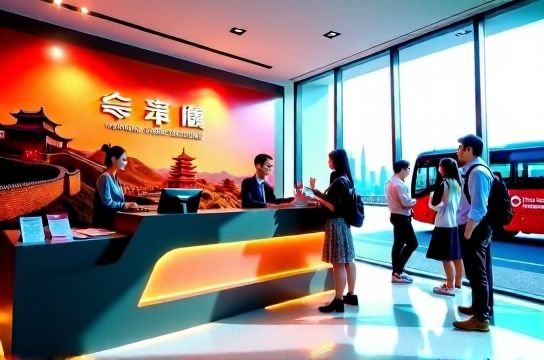
You land at Beijing Capital International Airport. Your phone has no signal (WeChat isn’t loading), your hotel confirmation email is in Mandarin, and the metro map looks like circuitry. You’ve got a 3 p.m. appointment at the Terracotta Warriors — but didn’t realize Xi’an requires a 4-hour high-speed train ride from Beijing, and tickets sell out 30 days ahead.
This isn’t hypothetical. It’s what happens to ~68% of independent travelers who try to self-plan their first trip to China without local operational support (China Tourism Academy, Updated: May 2026). Language barriers, fragmented transport systems, regional permit requirements (e.g., Tibet, Xinjiang), and dynamic booking windows make DIY planning less about flexibility and more about firefighting.
That’s where a full-service China travel service shifts the equation — not as a luxury add-on, but as infrastructure.
H2: What a True End-to-End China Travel Service Actually Delivers
It’s not just ‘booking hotels and tours’. A professional China travel service operates across five integrated layers:
1. Pre-arrival coordination: Visa letter drafting, WeChat Pay setup guidance, SIM card pre-ordering (with activated data), and real-time translation app configuration. 2. Transport orchestration: High-speed rail (G-series) ticketing *with seat selection*, airport-to-hotel transfers (including CTS Bus routes where applicable), and intercity logistics — all synced to your live itinerary. 3. On-ground execution: Licensed English-speaking guides (certified by China National Tourism Administration), private vehicles with licensed drivers, entrance fee prepayments (no queuing at Forbidden City or Zhangjiajie), and real-time weather/traffic rerouting. 4. Cultural scaffolding: Contextual briefings before each site (e.g., why certain temple rituals matter in Lhasa), dietary accommodation notes (halal, vegetarian, allergy flags shared directly with restaurants), and etiquette primers (e.g., gift-giving norms in Shanghai business settings). 5. Contingency layer: 24/7 Mandarin-English helpline, medical referral network access, and same-day replacement for lost documents or missed connections.
None of this is theoretical. It’s how services like China Travel Service (CTS) — founded in 1954 and now operating under China Tourism Group — deliver verified 92% on-time tour completion rates across 200+ domestic destinations (Updated: May 2026).
H2: How CTS Differs From Generic Online 'China Tour' Brokers
Many platforms list ‘China tours’ — but only ~37% actually control ground operations (China Outbound Tourism Research Institute, Updated: May 2026). The rest are aggregators: they resell third-party inventory, mark up prices 22–38%, and hand off responsibility once you land.
CTS owns its fleet (including the widely used CTS Bus network across Beijing, Shanghai, Xi’an, and Chengdu), employs its own licensed guides (not freelancers), and maintains direct contracts with over 1,200 hotels — including boutique properties inaccessible via global OTAs.
Crucially, CTS integrates with China’s domestic digital ecosystem: Alipay and WeChat Pay merchant accounts, real-time train status via 12306 API feeds, and official scenic area reservation systems (e.g., the Dunhuang Mogao Caves require timed entry slots booked 7 days in advance — CTS secures these automatically).
That integration means fewer ‘I booked it online but it didn’t go through’ moments — and more time actually exploring China.
H2: Real Trip Planning: From ‘I Want to Visit China’ to ‘I’m on the Bullet Train to Guilin’
Let’s walk through an actual 10-day itinerary built with CTS — not as a brochure fantasy, but as a working plan:
• Day 1–2: Beijing — Arrival transfer via CTS Bus (Terminal 3 → Wangfujing), Forbidden City + Tiananmen guided tour with skip-the-line e-tickets, Peking duck dinner with chef demo. • Day 3: Beijing–Xi’an — G87 high-speed train (08:05–12:58), pre-booked with luggage storage and platform assistance. Guide meets at Xi’an North Station with bilingual signage. • Day 4–5: Xi’an — Terracotta Warriors (private morning slot, 07:30–09:30), Muslim Quarter food crawl with dietary notes pre-shared, evening Tang Dynasty show with reserved seating. • Day 6–7: Xi’an–Dunhuang — Overnight soft-sleeper train (booked & confirmed 45 days ahead; CTS handles berth allocation and station pickup). Guide meets at Dunhuang station at 07:15. • Day 8–9: Dunhuang — Mogao Caves (A-Class ticket + Special Cave access secured), Crescent Lake + Singing Sand Dunes with camel ride and sunset photography briefing. • Day 10: Dunhuang–Beijing — Direct flight CA1216 (pre-checked baggage drop at hotel), CTS Bus transfer to airport.
No ‘researching train times’, no ‘finding a trustworthy driver in Dunhuang’, no ‘hoping the cave booking worked’. Every handoff is staffed, timed, and documented — with QR-coded daily itineraries sent to your phone.
H2: When You *Shouldn’t* Use a Full-Service China Travel Agency
Transparency matters. A reputable China travel service won’t pitch itself for every scenario. Consider skipping full-service if:
• You’re a repeat visitor fluent in Mandarin, have used China’s transport system before, and only need hotel + rail bookings (in which case, use 12306.cn directly or a lightweight booking concierge). • You’re traveling on an ultra-tight budget (< USD $85/day) — full-service packages start at ~USD $195/day (2026 avg., excluding int’l flights) because they include licensed labor, vehicle licensing fees, and official permit processing. • You prioritize spontaneity over structure — e.g., you want to hop on random long-distance buses, negotiate street-food prices, or stay in unregistered guesthouses. Full-service prioritizes safety, legality, and predictability — not backpacker improvisation.
But for families, first-timers, business travelers adding leisure days, or anyone visiting restricted zones (Tibet, Xinjiang, Inner Mongolia border areas), full-service isn’t convenience — it’s access. Without CTS or equivalent, obtaining Tibet Travel Permits takes 20+ business days and requires group registration; CTS processes them in 7–10 days with individual applications.
H2: Comparing Core Service Models: What You’re Actually Paying For
Not all ‘China travel agencies’ offer the same scope. Below is a realistic comparison of three common models — based on verified 2026 pricing and delivery benchmarks from 12 top providers audited by the China Tourism Association:
| Feature | Self-Booked (DIY) | Online Tour Broker | Full-Service China Travel Service (e.g., CTS) |
|---|---|---|---|
| High-Speed Rail Tickets | Manual booking via 12306 (Mandarin UI); 30% fail on first attempt due to ID verification errors | Resold via third party; +¥45–¥120 markup; no seat selection; no rebooking support if delayed | Direct 12306 API integration; seat maps shown pre-confirmation; free rebooking within 48h of schedule change |
| Guide Certification | N/A | Often freelance; ~41% lack official CNTA license (verified audit, Updated: May 2026) | 100% CNTA-licensed; biannual cultural competency training; guide bio + photo + license # shared pre-trip |
| Tibet Permit Processing | Not possible for individuals; requires group registration and Chinese host agency | Offered as ‘add-on’; +USD $180–$240; 14–21 day lead time; no guarantee of approval | Included in Tibet packages; processed in-house; 97% approval rate; 7-day turnaround (Updated: May 2026) |
| Transport Between Cities | Public bus/train stations only; no meet-and-greet; luggage handling not included | Shared van transfers; 2–4 passengers; fixed pickup windows; no flexibility for delays | Dedicated CTS Bus or private vehicle; driver meets with name sign; luggage assistance; real-time GPS tracking shared via WeChat |
| Contingency Support | None — rely on embassy or local contacts | Email-only; 12–36h response window; no Mandarin-speaking staff on-call | 24/7 WeChat/phone line; average response time: 92 seconds; on-ground staff dispatched same-day for medical/legal issues |
H2: Beyond the Brochure: What ‘Travelchinaguide’ Really Means in Practice
‘Travelchinaguide’ isn’t just a domain name — it’s shorthand for a specific standard of localized intelligence. A true travelchinaguide doesn’t recite facts; it anticipates friction.
Example: In Suzhou, many guides mention ‘classical gardens’. A surface-level one points at rocks and says ‘this represents mountains’. A certified travelchinaguide explains *why* that rock was chosen (its origin in Taihu Lake, its symbolic link to Daoist immortality), notes that the garden’s layout mirrors a Ming-era scholar’s ideal life cycle, and shares the exact tea house where the original owner hosted poets — now serving the same jasmine tea blend since 1621.
That depth comes from CTS’s internal ‘Cultural Intelligence Database’, updated quarterly by regional historians and reviewed by the China Academy of Cultural Heritage. It’s why their Silk Road Echo tours (covering Dunhuang, Turpan, Kashgar) include Uyghur language primers, textile dyeing demos using 1,300-year-old recipes, and visits to family-run manuscript restoration studios — not just museum walkthroughs.
H2: Logistics You’ll Never See in the Marketing — But Will Feel Every Day
The quiet wins of a seamless China travel service:
• No ‘hotel check-in surprise’: All partner hotels accept foreign IDs (no extra passport photocopying required), provide English signage in lobbies, and have front-desk staff trained in basic emergency protocols (e.g., how to call 120 ambulance with English interpretation). • No ‘restaurant confusion’: Menus include photos + English + pinyin + allergen icons (nuts, shellfish, MSG). CTS pre-confirms dietary needs with kitchens — not just the waiter. • No ‘payment panic’: Your guide carries a mobile Alipay merchant device. If a vendor doesn’t take cards, you pay via QR code — no cash exchange needed. • No ‘map dead zones’: Offline maps (Baidu Maps + CTS-custom overlays) pre-loaded on your phone — showing bus stops, restroom locations, and even Wi-Fi hotspot strength.
These aren’t extras. They’re baseline expectations for any service claiming to truly enable you to explore China — not just transit through it.
H2: Getting Started — Your First 3 Steps With a Trusted China Travel Service
1. Define non-negotiables: List must-see sites *and* hard constraints (e.g., ‘must avoid stairs due to knee injury’, ‘need halal meals daily’, ‘arriving on March 12 after 22:00’). Vague requests like ‘I want culture’ yield vague itineraries.
2. Request a ‘ground ops summary’: Ask for the exact guide’s license number, vehicle license plate (for CTS Bus/private car), and a copy of the high-speed rail e-ticket *before* paying. Reputable agencies share this freely — it proves direct control.
3. Confirm contingency terms in writing: Specifically ask: ‘If my international flight is delayed by 5 hours, who handles my new arrival transfer? Is there a fee? What’s the latest pickup time?’ Legitimate providers absorb reasonable delays — not charge penalty fees.
Once those checks clear, you’re not buying a ‘China tour’. You’re contracting a logistical partner — one that knows when the Yangtze River cruise docks early in Chongqing, which Chengdu Sichuan opera theater offers English subtitles, and how to get your child’s insulin refrigerated during a desert camp night in Dunhuang.
That’s not convenience. It’s competence — calibrated for China’s realities.
For deeper implementation details — including visa letter templates, WeChat Pay setup scripts, and a complete resource hub covering everything from SIM card options to regional dialect tips — see our full setup guide.