
Navigate Shenzhen City Transit Without Stress
- Date:
- Views:1
- Source:The Silk Road Echo
Let’s be real—figuring out public transit in a new city can feel like trying to solve a Rubik’s Cube blindfolded. But if you're heading to Shenzhen, one of China’s most tech-savvy metropolises, I’ve got your back. As someone who’s tested nearly every commute option here—from the metro to e-bikes—I’ll walk you through how to Navigate Shenzhen City Transit Without Stress.
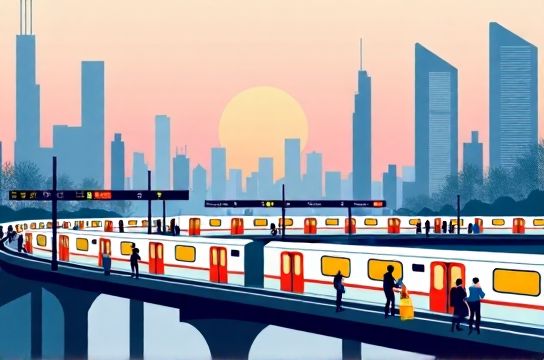
Why Shenzhen’s Transit Rules the Game
Shenzhen isn’t just a hub for tech giants like Huawei and Tencent—it’s also leading the way in urban mobility. With over 15 million residents and a metro system that’s expanded by an average of 30 km per year since 2010, the city has built one of the most efficient transit networks in Asia.
The backbone? The Shenzhen Metro. As of 2024, it spans 16 lines and over 550 km of track—longer than London’s Underground! And here’s the kicker: trains arrive every 2–3 minutes during peak hours. No more sweating over missed connections.
Your Best Options Compared
Still not sure whether to take the metro, bus, or hop on a shared scooter? Let me break it down with real data:
| Transport Mode | Avg. Speed (km/h) | Coverage (km²) | Cost (RMB per ride) | Peak Wait Time |
|---|---|---|---|---|
| Metro | 35 | 800 | 3–8 | 2–3 min |
| Bus | 18 | 1,200 | 2 | 8–10 min |
| Ride-hailing (Didi) | 25 | Full city | 15–40 | 5–7 min |
| Shared E-bike | 15 | 600 | 1.5 + 1.5/min | N/A (on-demand) |
As you can see, the Shenzhen Metro wins for speed and reliability. Buses cover more ground but are slower due to traffic. E-bikes? Super fun for short trips under 3 km—but watch out for those sudden downpours!
Pro Tips from a Local Rider
- Download the Shenzhen Metro App (or use WeChat mini-programs) to check real-time arrivals and platform maps.
- Get a Tencent乘车码 (Ride Code) via WeChat—it scans at all turnstiles. No need for cash or cards.
- Avoid Line 1 between Luohu and Window of the World from 8–9 AM. Seriously. It’s packed.
- Use Didi for late-night travel—public transit shuts down around midnight.
And if you’re visiting tech parks in Nanshan or the OCT Loft creative zone, consider combining the metro with a 10-minute e-bike ride. It cuts travel time by up to 40% compared to walking from the station.
Final Verdict: Keep It Simple
You don’t need to overthink it. For most trips, your go-to should be the metro, backed by a solid urban transit strategy. It’s fast, cheap, and covers nearly every hotspot. Save ride-hailing for rainy days or when you’re dragging luggage.
Bottom line: with the right tools and a bit of local insight, you can Navigate Shenzhen City Transit Without Stress—and maybe even enjoy the ride.