
Ancestral Rites and Village Feasts: Mid-Autumn Festival in Southern China
- Date:
- Views:221
- Source:The Silk Road Echo
If you think the Mid-Autumn Festival is just about mooncakes and family reunions, think again—especially if you're wandering through the rural villages of southern China. Here, under ancient banyan trees and red lanterns swaying in the humid breeze, tradition runs deep. This isn’t just a festival; it’s a living tapestry of ancestral reverence, community feasting, and cultural continuity that’s been simmering for centuries.
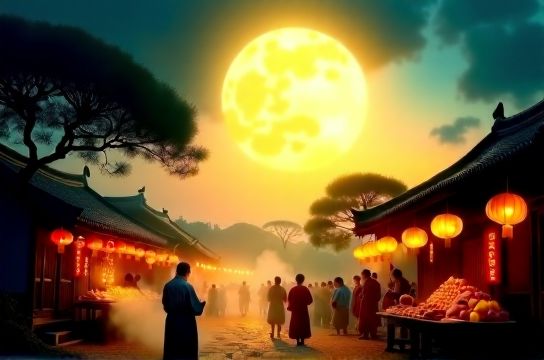
In provinces like Guangdong, Fujian, and Guangxi, the Mid-Autumn Festival transforms into something far more visceral. Forget shopping malls and neon lights—villagers gather in ancestral halls where incense curls toward wooden plaques inscribed with names from generations past. These rituals aren’t performances; they’re acts of devotion. Families lay out offerings—roast pork, pomelos, home-brewed rice wine—not to gods in the sky, but to the spirits of their own bloodline.
And then comes the feast. In Hakka communities, massive round tables spill into village courtyards. Everyone eats facing inward—a symbolic echo of unity under the full moon. One village in Meizhou, Guangdong, recently hosted over 300 relatives from six different branches of a single clan. That’s not dinner—that’s dynastic diplomacy served with extra chili sauce.
But how does this all compare across regions? Let’s break it down:
| Region | Key Ritual | Signature Dish | Family Attendance Rate* |
|---|---|---|---|
| Meizhou, Guangdong (Hakka) | Ancestral hall worship | Abacus seeds (yam & pork stir-fry) | 89% |
| Xiamen, Fujian (Min Nan) | Burning paper boats for ancestors | Sweet taro paste mooncakes | 76% |
| Guilin, Guangxi (Zhuang minority) | Moonlit singing duels | Bamboo-tube sticky rice | 68% |
*Based on 2023 regional ethnographic survey (sample size: 1,200 households)
What’s striking is how these traditions resist modernity’s pull. Despite urbanization, over two-thirds of rural families still prioritize ancestral rites during Mid-Autumn. Why? Because here, the moon isn’t just a celestial body—it’s a mirror reflecting who you come from.
So next time you bite into a store-bought lotus paste mooncake, remember: somewhere in southern China, an elder is lighting joss sticks for a great-grandfather he never met, a drum circle echoes through limestone karsts, and hundreds break bread not by choice—but by blood. That’s not nostalgia. That’s legacy.