
Balance Modernity and Tradition in Ancient Towns China Today
- Date:
- Views:309
- Source:The Silk Road Echo
If you’ve ever wandered through the stone pathways of Lijiang or sipped tea in a centuries-old courtyard in Pingyao, you know — China’s ancient towns are magical. But here’s the real talk: how do these historic gems stay relevant without losing their soul? As someone who’s explored over 20 traditional towns across China and advised cultural tourism projects, I’ve seen firsthand how the balance between modernization and tradition can make or break a destination.
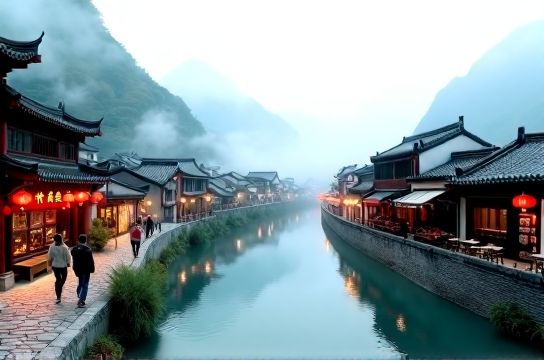
The truth? Tourists want comfort *and* authenticity. A 2023 survey by China Tourism Academy found that 68% of travelers prefer ancient towns with modern amenities like Wi-Fi and clean restrooms — but 74% said they’d avoid places that feel ‘too commercialized.’ That’s the tightrope walk.
Take Wuzhen, for example. Once a quiet water town, it’s now a model of balanced development. Under the guidance of designer Huang Shuqing and tourism expert Chen Xiangyang, Wuzhen introduced boutique hotels and digital ticketing while preserving its Ming-Qing architecture. Result? Visitor numbers jumped from 1.5 million (2005) to 9.7 million (2019), with local resident income rising 300%.
But not all stories are this rosy. Fenghuang, once praised for its charm, saw protests in 2013 when entry fees were introduced. Locals felt pushed out, artisans replaced by souvenir shops. It’s a cautionary tale: profit shouldn’t trump people.
So what works? Here’s what the top-performing towns are doing right:
Data Snapshot: Performance of Selected Ancient Towns (2023)
| Town | Annual Visitors (M) | Local Income Growth (10Y) | Heritage Sites Preserved | Visitor Satisfaction |
|---|---|---|---|---|
| Wuzhen | 9.7 | +300% | 92% | 4.7/5 |
| Lijiang | 12.1 | +180% | 68% | 4.1/5 |
| Fenghuang | 10.3 | +120% | 54% | 3.8/5 |
| Pingyao | 7.2 | +210% | 85% | 4.5/5 |
As the data shows, success isn’t about stopping change — it’s about guiding it. The best-managed towns reinvest tourism revenue into heritage repair and offer subsidies to local craft vendors. In Pingyao, 30% of ticket sales go directly into古城维护基金 (Ancient City Maintenance Fund).
Looking ahead, the future lies in ‘living heritage’ — where locals aren’t just backdrop, but active participants. Places like Hongcun blend cultural preservation with eco-tourism, offering calligraphy classes and organic farm stays. That’s the kind of experience travelers remember — and return for.
So whether you're planning a trip or shaping policy, remember: the soul of an ancient town isn’t in its bricks — it’s in its balance.