
Journey Through Ancient Towns and UNESCO Heritage in China
- Date:
- Views:252
- Source:The Silk Road Echo
China isn’t just about skyscrapers and high-speed trains — it’s a living museum of ancient wisdom, culture, and breathtaking heritage. If you’ve ever dreamed of walking through misty water towns, wandering cobbled alleys lined with Ming-era homes, or standing in awe before imperial palaces, then this journey through China’s ancient towns and UNESCO World Heritage Sites is your ultimate bucket list.
Why Ancient China Still Captivates the World
With over 50 UNESCO-listed sites, China ranks among the top countries for cultural preservation. From the Great Wall to the Forbidden City, these landmarks aren’t just tourist spots — they’re testaments to thousands of years of philosophy, architecture, and resilience.
But beyond the famous icons lie hidden gems: sleepy canalside villages, mountain-top temples, and centuries-old ethnic traditions still thriving today. Let’s dive into some must-visit destinations that blend history, beauty, and soul.
Top 5 Must-Visit Ancient Towns & UNESCO Sites
| Town / Site | UNESCO Year | Key Feature | Best Time to Visit |
|---|---|---|---|
| Luangeng (Yunnan) | 2013 | Nakhi minority culture & Naxi scripts | March–May |
| Zhouzhuang (Jiangsu) | Part of Grand Canal WHS | 'Venice of the East' with 14 bridges | April–June |
| Lijiang Old Town | 1997 | Well-preserved Han & Naxi architecture | Spring/Autumn |
| Mount Lu (Jiangxi) | 1996 | Cultural landscape & Taoist/Buddhist temples | September–November |
| Fujian Tulou Clusters | 2008 | Hakka communal earthen buildings | May–October |
These places aren’t frozen in time — they breathe with life. In Lijiang, you’ll hear traditional Dongba music echoing at dusk. In Fujian’s tulou, families still live in circular fortress-homes built 300 years ago.
The Magic of Zhouzhuang: Paddles & Poetry
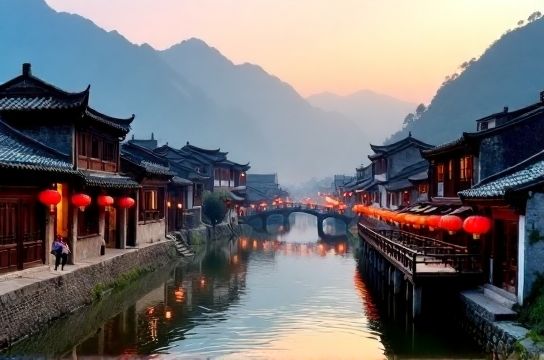
Imagine gliding down a quiet canal in a wooden boat, past whitewashed houses with upturned eaves. That’s Zhouzhuang, one of China’s best-preserved water towns. Built in the 11th century, it’s crisscrossed by 60+ stone bridges and fed by the ancient Grand Canal — now a UNESCO site itself.
Fun fact: Over 2 million visitors come here annually, but visit early morning, and you’ll have the fog-draped lanes all to yourself.
Lijiang: Where Culture Meets Cobblestones
Lijiang Old Town escaped major modernization thanks to a devastating earthquake in 1996 — ironically leading to UNESCO protection. Today, its narrow streets buzz with tea houses, local crafts, and the soft strum of Naxi pipa music.
Pro tip: Hike up Lion Hill for a panoramic view of tiled rooftops framed by snow-capped Jade Dragon Snow Mountain.
Not Just Pretty Facades: The Living Heritage
What makes these towns special isn’t just their looks — it’s how tradition lives on. In Luangeng, locals still use pictographic Naxi script, one of the world’s last living hieroglyphs. In Fujian, entire clans gather in tulou courtyards for festivals, cooking rice cakes over open fires.
Travel with respect: support local artisans, avoid loud behavior in quiet zones, and try learning a few phrases in the local dialect.
Plan Your Journey Like a Pro
Most ancient towns are accessible via domestic flights or high-speed rail from major hubs like Chengdu, Kunming, or Shanghai. Combine Lijiang with a trip to Shangri-La for a Himalayan cultural deep dive, or pair Zhouzhuang with Suzhou’s classical gardens.
And remember: slow travel wins here. Spend at least two nights soaking in the rhythm of these places — sunrise mists, evening lanterns, and all.