
Celestial Festivals: Witnessing the Yi Peng Lanterns in Southwest China
- Date:
- Views:265
- Source:The Silk Road Echo
If you’ve ever dreamed of stepping into a scene straight out of a fantasy movie—thousands of glowing lanterns floating into the night sky like stars being born—then Yi Peng in Southwest China is your real-life magic moment. Every year, usually around November, the skies above Yunnan Province light up with this breathtaking festival that blends ancient tradition, spiritual meaning, and pure visual wonder.
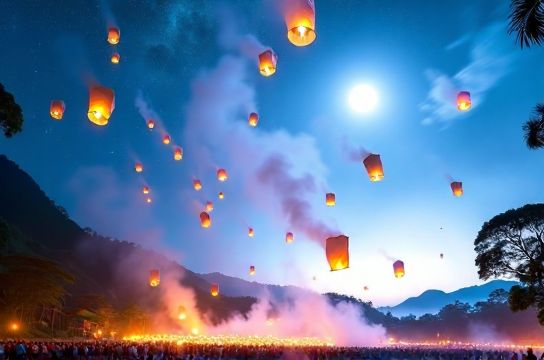
Yi Peng isn’t just about pretty lights (though trust us, it’s *incredibly* photogenic). Rooted in Theravāda Buddhist culture, especially among the Dai people, the festival marks a time of letting go—of bad luck, negative thoughts, and past regrets. As each lantern rises, it carries wishes, prayers, and hopes for a brighter future. It’s emotional, peaceful, and kind of gives you goosebumps when you see thousands lift off at once.
The main action happens in Xishuangbanna, a tropical corner of Yunnan where lush rainforests meet vibrant ethnic traditions. Unlike the more famous sky lantern festivals in Thailand (which share cultural roots), Yi Peng here has its own local flavor—think traditional Dai costumes, drum circles, riverside ceremonies, and even elephant processions (yes, really).
One of the most powerful moments? The nighttime river rituals. Locals place small floating lanterns—called *deng hua*—on the Mekong River’s tributaries. These lotus-shaped lights drift gently downstream, symbolizing the release of suffering and the flow of good karma. It’s quiet, reflective, and deeply moving.
And then—boom—the sky fills. Hundreds, sometimes thousands, of large rice-paper lanterns are released together. Made from bamboo frames and oiled paper, they rise slowly, carried by the heat of a small candle flame. Watching them ascend into the dark sky feels like witnessing collective hope taking flight.
Travelers from all over flock to experience this, and while it’s becoming more popular, it still holds onto its authentic spirit. There’s no commercial overload or flashy stages—just community, culture, and connection. Plus, visiting during Yi Peng means diving into Dai cuisine (try the pineapple rice and grilled river fish), exploring tropical gardens, and maybe catching a peacock dance performance under the moonlight.
Planning a trip? Pack light layers—it’s warm but humid—and bring a good camera. Also, respect local customs: don’t touch ceremonial items, follow release instructions carefully, and avoid drones unless permitted (some areas ban them for safety).
Yi Peng isn’t just a festival. It’s a feeling. A reminder that beauty, tradition, and human kindness can light up the darkest nights.