
Silk Roads and Ancient Scripts: Tracing China's Cultural Footprints
- Date:
- Views:283
- Source:The Silk Road Echo
Ever wondered how your favorite spices ended up in your kitchen? Or why Chinese characters look like tiny works of art? Buckle up—we’re diving into one of history’s most epic adventures: the Silk Road and the ancient scripts that carried China’s soul across continents.
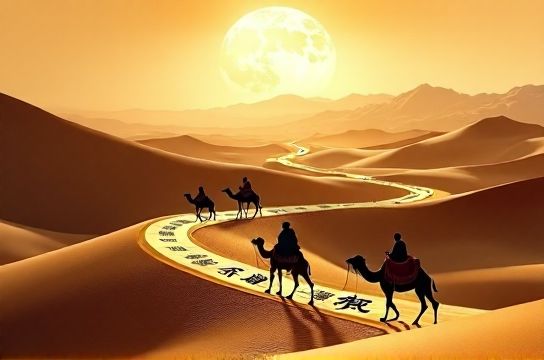
Picture this: dusty caravans winding through deserts, camels loaded with silk, tea, and porcelain. This wasn’t just a trade route—it was the ancient version of the internet. The Silk Road connected China to the Middle East, Africa, and Europe, turning cities like Xi’an and Samarkand into bustling cultural hubs. But it wasn’t just about goods. Ideas, religions, and yes—writing systems—hitched a ride too.
China’s writing system, one of the oldest in the world, played a quiet but powerful role. While merchants traded bolts of silk, scholars and monks were passing around scrolls filled with Chinese characters. These weren’t just for poetry (though, let’s be real, they’re beautiful). They carried knowledge—medicine, astronomy, philosophy—that shaped entire civilizations.
Think about Buddhism. It traveled from India to China along these very routes, and guess what helped spread it? Written texts. Monks translated Buddhist sutras into Chinese, using intricate characters that preserved meaning across languages. Suddenly, a farmer in Dunhuang could read the same teachings as a monk in Kyoto. That’s cultural power.
And it didn’t stop there. As traders moved west, elements of Chinese script influenced Central Asian languages. You can still see echoes in old Uyghur or Mongolian scripts. It’s like linguistic DNA—subtle, but everywhere if you know where to look.
But here’s the kicker: the Silk Road wasn’t a one-way street. While China exported culture, it imported too. Persian art, Indian math, Arabic astronomy—all flowed back, enriching Chinese civilization. The result? A dazzling mix of ideas that made cities like Chang’an (modern Xi’an) the New York City of their time.
Today, you can still walk parts of the Silk Road, visit ancient grottoes covered in murals, or hold a replica of a Han Dynasty bamboo scroll. These aren’t just tourist stops—they’re proof of how deeply connected our world has always been.
So next time you sip green tea or admire a calligraphy piece, remember: you’re not just enjoying a product. You’re touching a legacy built by camel caravans, curious minds, and the enduring power of the written word.
The Silk Road may be ancient history, but its spirit lives on—in every cultural exchange, every shared idea, every script that bridges worlds.