
Where Mountains Meet Myth: Pilgrimage and Culture at Mount Tai
- Date:
- Views:327
- Source:The Silk Road Echo
Nestled in Shandong Province, China, Mount Tai (or Taishan) isn’t just a mountain—it’s a living legend. Standing at 1,545 meters, this UNESCO World Heritage Site has drawn emperors, poets, and pilgrims for over 3,000 years. Why? Because Mount Tai isn’t just about altitude; it’s where heaven meets earth, myth meets history, and culture climbs to new heights.
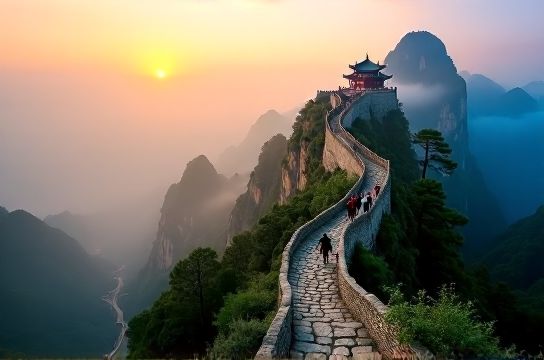
Known as the ‘Supreme of the Five Sacred Mountains,’ Mount Tai symbolizes stability, power, and spiritual ascent. Ancient emperors performed the Fengshan sacrifices here to honor heaven and earth—over 72 rulers, including Qin Shi Huang, made the climb. Today, more than 8 million visitors come annually, chasing both views and enlightenment.
The journey begins at the Red Gate (Hongmen), the traditional southern route favored by scholars and pilgrims. It’s a 6-8 hour trek with over 7,000 stone steps winding through temples, steles, and jaw-dropping cliffs. But don’t let the numbers scare you—every step tells a story.
Here’s a quick breakdown of the key sections:
| Section | Distance | Elevation Gain | Highlights |
|---|---|---|---|
| Red Gate to Mid-Heaven Gate | 4.5 km | 600 m | Dai Temple, Stele Forest, Wondrous Stone Valley |
| Mid-Heaven Gate to South Heaven Gate | 2.5 km | 400 m | Eighteen Bends, Azure Cloud Temple |
| South Heaven Gate to Summit | 1 km | 100 m | Dawn Pavilion, Jade Emperor Peak |
Reaching the summit at dawn? Worth every blister. The ‘Sea of Clouds’ rolls beneath you as the sun cracks the horizon—this is the famed ‘Sunrise Over the East Sea,’ a moment so sacred, it’s been painted, praised, and prayed over for centuries.
But Mount Tai isn’t just a hike. It’s a cultural tapestry. Over 1,800 stone inscriptions dot the path—calligraphy from emperors and sages, some dating back to the Qin Dynasty. The Dai Temple at the base? A sprawling complex blending architecture, ritual, and artistry that rivals the Forbidden City.
For modern travelers, cable cars offer a scenic shortcut (especially from Tianwai Village), but walking the ancient path keeps you in rhythm with history. Pro tip: Start before sunrise if hiking—fewer crowds, cooler temps, and that golden light hitting the steles? Pure magic.
In Chinese cosmology, Mount Tai guards the soul’s passage and anchors the eastern compass point. That energy still hums today—not just in temples, but in the shared silence of climbers catching their breath, united by awe.