
Ancestor Worship and Family Feasts: Understanding Qingming Festival in Guangxi
- Date:
- Views:321
- Source:The Silk Road Echo
If you've ever wandered through the misty hills of Guangxi during early April, chances are you’ve stumbled upon families sweeping graves, burning incense, and sharing meals under ancient trees. This is Qingming Festival, also known as Tomb-Sweeping Day—a moment when past and present collide in quiet reverence.
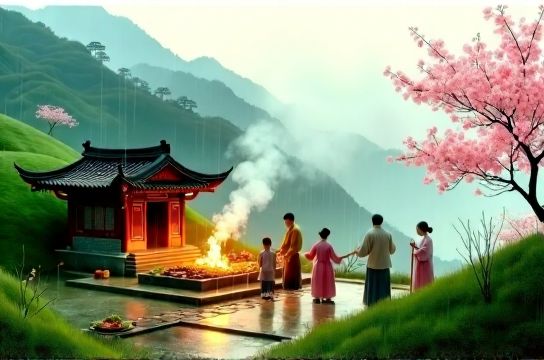
In Guangxi, a region bursting with ethnic diversity—from Zhuang to Yao and Han communities—Qingming isn’t just ritual; it’s identity. More than 15 million households across the province engage in ancestral rites each year, according to local civil affairs data. But what makes Guangxi’s celebration stand out?
For starters, food speaks volumes. Families prepare qingtuan-like rice cakes made from glutinous rice and mugwort, but here’s the twist: in southern Guangxi, they’re often dyed yellow with coix seed or wrapped in banana leaves. These aren’t just snacks—they’re offerings steeped in symbolism, representing continuity and harvest.
And then there’s the music. In rural Longsheng, Zhuang villagers perform “San Yue San” folk songs near tombs—a poetic blend of mourning and celebration that echoes through karst peaks. It’s not somber; it’s soulful.
To help you grasp how traditions vary across regions, check out this snapshot:
| Region | Key Tradition | Signature Food | Participation Rate* |
|---|---|---|---|
| Nanning | Grave sweeping & paper burning | Five-colored glutinous rice | 89% |
| Guilin (Yangshuo) | River-side ancestor calls | Bamboo-tube sticky rice | 76% |
| Chongzuo | Cattle sacrifice (Zhuang) | Herb-infused rice balls | 68% |
*Household participation based on 2023 Guangxi Civil Affairs Survey
But let’s be real—modern life is changing things. Urbanization means fewer young people return home, and eco-friendly policies now limit fire use at cemeteries. Still, innovation thrives: digital tomb-sweeping platforms saw a 40% surge in Guangxi users last year.
So whether you're tracing roots or simply curious, experiencing Qingming in Guangxi offers more than tradition—it’s a living story written in smoke, song, and steamed rice.