
The Silk Road Legacy: Tracing China's Historical Trade and Culture
- Date:
- Views:302
- Source:The Silk Road Echo
Ever wondered how your favorite spices, silk scarves, or even the origins of Buddhism made their way across continents? Let’s time-travel back over 2,000 years to uncover the epic saga of the Silk Road—one of history’s most legendary trade networks. Spoiler: it wasn’t just about silk.
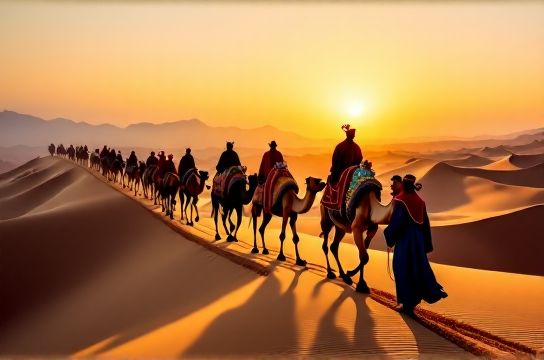
Originating during China’s Han Dynasty (around 130 BCE), the Silk Road wasn’t a single road but a sprawling web of land and maritime routes connecting East Asia to the Mediterranean. Stretching over 4,000 miles, this network linked bustling cities like Xi’an in China to Damascus and Rome. Merchants braved deserts, mountains, and bandits—all for the promise of profit and cultural exchange.
Yes, silk was king. Chinese artisans guarded the secrets of sericulture fiercely, making silk a luxury item as valuable as gold in Rome. But the trade didn’t stop there. Here’s a snapshot of what moved along these ancient highways:
| Commodity | From | To | Impact |
|---|---|---|---|
| Silk | China | Rome, Persia | Luxury fashion, economic power |
| Spices (cinnamon, ginger) | South Asia, China | Middle East, Europe | Revolutionized cuisine and medicine |
| Buddhism | India | China, Central Asia | Transformed spiritual landscapes |
| Glassware | Roman Empire | China | New artistic influences |
Cultural exchange was the unsung hero of the Silk Road. Ideas traveled faster than goods. Buddhist monks journeyed from India to China, building temples and translating scriptures. Meanwhile, Chinese paper-making and gunpowder eventually reached the West, reshaping civilizations.
But let’s get real—the Silk Road wasn’t all poetic exchanges. It also carried plagues (like the Black Death) and fueled conflicts. Yet, its legacy is undeniable: it laid the groundwork for globalization long before the word existed.
Today, you can walk parts of the original route through Xinjiang or visit UNESCO World Heritage sites like Dunhuang’s Mogao Caves, where ancient murals tell stories of camel caravans and celestial beings.
The modern Belt and Road Initiative? That’s China’s 21st-century echo of the Silk Road—connecting over 140 countries with infrastructure and trade deals worth over $1 trillion.
In short, the Silk Road wasn’t just a trade route—it was humanity’s first major network of connection. So next time you sip tea or wear silk, remember: you’re part of a story that began centuries ago, one caravan at a time.