
Harmony in Design: Exploring the Philosophy Behind China's Classical Gardens
- Date:
- Views:226
- Source:The Silk Road Echo
If you've ever wandered through a Chinese classical garden, you know it’s not just about pretty plants and serene ponds. These spaces are poetic expressions of balance, nature, and philosophy—crafted with intention. Rooted deeply in Daoist, Confucian, and Buddhist thought, China’s classical gardens aren’t just landscapes; they’re living metaphors.
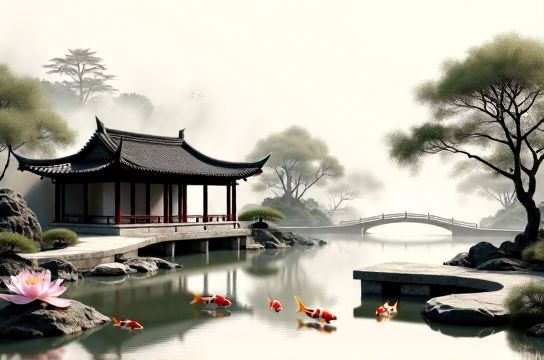
Take Suzhou, often called the 'Venice of the East,' which houses over 50 classical gardens, nine of which are UNESCO World Heritage Sites. These gardens were designed as retreats for scholars, officials, and poets—a place to escape the chaos of court life and reconnect with nature.
The core idea? Harmony. Not symmetry, not perfection—but harmony between human creation and the natural world. Unlike Western gardens that often impose order on nature, Chinese gardens seek to mimic nature’s spontaneity. Rocks twist like dragons, water flows unpredictably, and pathways meander—not to confuse, but to invite contemplation.
Let’s break down the key design principles:
| Design Principle | Philosophical Root | Example Feature |
|---|---|---|
| Yin-Yang Balance | Daoism | Rock (yang) beside water (yin) |
| Layered Illusion | Buddhism | Framed views through moon gates |
| Scholar’s Virtue | Confucianism | Pavilions named after moral ideals |
| Controlled Wildness | Daoism | Pruned pines shaped like clouds |
One of the most famous examples is the Humble Administrator’s Garden in Suzhou. Covering 5.7 hectares, it uses water to occupy nearly one-third of the space—symbolizing flow and adaptability. Every element has meaning: the lotus flower stands for purity, bamboo for resilience, and scholar’s rocks (gongshi) represent ancient mountains shaped by time.
And here’s a fun fact: many gardens use borrowed scenery (‘jiejing’)—a technique where distant pagodas or hills are framed intentionally, making the garden feel larger than it is. It’s like visual storytelling, pulling the outside world into your moment of peace.
These gardens weren’t just for beauty—they were spiritual tools. Walking through one was a meditative act, aligning the mind with the rhythms of nature. Even today, modern urban planners look to these designs for inspiration in creating calming green spaces in crowded cities.
In a world obsessed with speed and efficiency, China’s classical gardens remind us to slow down, observe, and find balance. They’re not just relics—they’re blueprints for mindful living.