
Pilgrimage to Dunhuang: Where Art and Spirituality Merge on the Silk Road
- Date:
- Views:273
- Source:The Silk Road Echo
Imagine walking through a desert cave that's been whispering secrets for over a thousand years. That’s Dunhuang for you—a mystical oasis on the ancient Silk Road where art, faith, and history collide in the most breathtaking way. If you're craving a journey that feeds both your soul and your Instagram feed, pack your bags. This isn’t just a trip; it’s a pilgrimage.
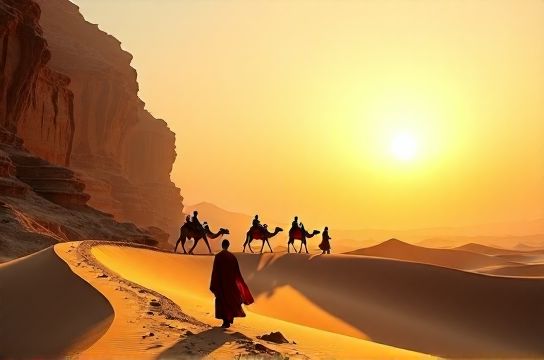
Why Dunhuang? Because Time Stopped Here
Nestled in China’s Gansu Province, Dunhuang was once a cultural crossroads. Buddhist monks, Persian traders, and Central Asian musicians all passed through, leaving behind a legacy etched into stone. The star of the show? The Mogao Caves, also known as the Thousand Buddha Grottoes. With 735 caves and over 45,000 square meters of frescoes, this UNESCO World Heritage Site is basically an open-air (well, indoor) museum of spiritual graffiti.
Here’s a fun fact: some of these murals date back to the 4th century. Yes, before the Renaissance, before Shakespeare, even before pizza was a thing—artists were painting celestial beings with gold dust and lapis lazuli.
The Numbers Don’t Lie: A Snapshot of Mogao
Let’s break it down with some hard data:
| Feature | Detail |
|---|---|
| Total Caves | 735 |
| Fresco Area | 45,000+ m² |
| Buddha Statues | Over 2,000 |
| Time Span | 4th – 14th Century |
| UNESCO Listed | 1987 |
And get this—only about 60 caves are open to the public. Why? Conservation. These walls are fragile, and every breath we take adds moisture. So yes, you’re literally helping preserve history by not sneezing near a 1,000-year-old bodhisattva.
Not Just Caves: The Crescent Lake & Singing Sands
After diving deep into spiritual art, cool off at Crescent Lake, a shimmering sliver of water surrounded by towering dunes. Legend says it never dries up, no matter the drought. And the nearby Singing Sand Dunes? Climb them, slide down, and listen—the sand hums like a Tibetan singing bowl. Scientists blame wind and static electricity, but honestly, it feels like the desert is chanting.
Pro Tips for the Modern Pilgrim
- Best Time to Visit: April–June or September–October. Avoid July heat and winter winds.
- Book Early: Cave tours require timed tickets. Popular slots sell out weeks ahead.
- Go Digital: Check out the Digital Dunhuang project online—high-res 3D scans of restricted caves. It’s like VR enlightenment.
Dunhuang isn’t just a destination. It’s a conversation across centuries. Whether you’re a history nerd, a spiritual seeker, or just someone who loves a good story, this place will leave you speechless—then inspire you to speak up about preserving our shared human heritage.