
Laughing Behind the Censorship: The Hidden Humor in Chinese Online Buzzwords
- Date:
- Views:284
- Source:The Silk Road Echo
Ever scrolled through Chinese social media and felt like everyone’s laughing at a joke you didn’t get? You’re not alone. Beneath the surface of China’s tightly regulated internet lies a vibrant, witty world of coded humor—where netizens use clever wordplay, puns, and surreal memes to poke fun at everything from politics to daily struggles, all while staying just under the radar.
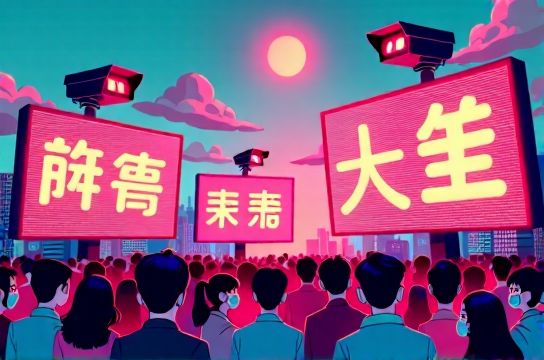
Let’s dive into the fascinating universe of Chinese online buzzwords—how they’re born, why they spread, and what they really mean.
The Art of Saying What You Can’t Say
In a digital landscape where direct criticism is risky, humor becomes resistance. Chinese netizens have mastered the art of indirect expression. By twisting homophones, borrowing animal metaphors, or repurposing ancient poetry, they craft messages that fly past censors but scream meaning to those in the know.
Take the term “Grass Mud Horse” (草泥马)—a literal nonsense phrase that sounds eerily like a Mandarin profanity. It became an internet sensation, complete with animated videos and fan art, symbolizing defiance wrapped in absurdity.
Top 5 Viral Buzzwords & Their Secret Meanings
Here’s a quick breakdown of some iconic terms that defined recent online culture:
| Buzzword | Literal Meaning | Hidden Meaning | Year Popularized |
|---|---|---|---|
| 内卷 (Nèijuǎn) | Involution | Relentless competition with no real progress | 2020 |
| 躺平 (Tǎngpíng) | Lying flat | Rejecting societal pressure to overwork | 2021 |
| 社死 (Shèsǐ) | Social death | Extreme embarrassment in public | 2019 |
| 打工人 (Dǎgōngrén) | Working stiff | Sarcastic self-label for overworked employees | 2020 |
| 凡尔赛 (Fán'ěrsài) | Versailles | Humblebragging about wealth or success | 2021 |
These aren’t just slang—they’re cultural snapshots. For instance, tǎngpíng emerged as a quiet rebellion against China’s grueling work culture, resonating with millions burned out by the ‘996’ schedule (9 am–9 pm, 6 days a week).
Why This Humor Matters
It’s easy to dismiss these phrases as silly internet trends. But they’re more than that—they’re a form of emotional release and community bonding. When people say “I’m just a little potato” (小土豆), calling themselves insignificant in a vast system, it’s both self-deprecating and deeply human.
And let’s be real: this creativity keeps the internet alive under pressure. Platforms like Weibo, Bilibili, and Douyin are playgrounds for linguistic innovation, where a single meme can spark nationwide conversations—without ever breaking the rules.
So next time you see a weird animal meme or a poetic rant about ‘lying flat,’ remember: there’s laughter behind the censorship. And sometimes, that’s the loudest voice of all.