
The Emoji Rebellion: Exploring the Hidden Meanings in China’s Meme Culture
- Date:
- Views:311
- Source:The Silk Road Echo
You’ve seen them—those quirky, innocent-looking emojis popping up in Chinese social media posts. A simple eggplant here, a pair of peaches there. But hold up—what if I told you these weren’t just random smileys? Welcome to the wild world of China’s emoji rebellion, where memes are more than jokes—they’re survival tools.
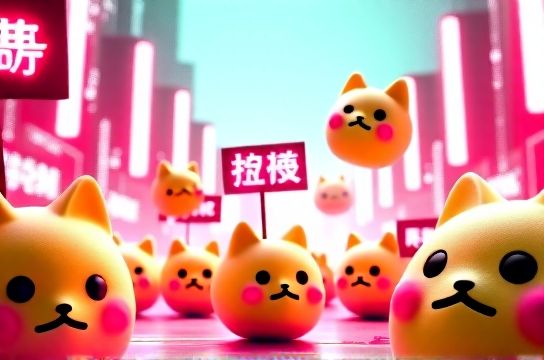
In a digital landscape tightly monitored by algorithms and censors, young netizens in China have turned to creativity to say what they can’t type. Enter: the era of coded communication. Emojis, on the surface harmless, have become secret weapons in a silent battle for free expression.
Take the humble peach 🍑. Innocent fruit? Not quite. In Chinese internet slang, it’s often used as a cheeky stand-in for… well, you know. Pair it with an eggplant 🍆, and suddenly you’re not talking about dinner. But beyond the humor, these symbols serve a deeper purpose—they dodge keyword filters. Censors might catch explicit words, but a juicy peach slipping through? That’s meme magic.
Then there’s the doge face 🐶—yes, that wide-eyed, tilted head dog. Originally from Japan, it’s been adopted by Chinese users to express sarcasm or disbelief, especially when reacting to absurd official statements. It’s like saying, ‘Sure, bro, totally believable,’ without actually saying it. The cuteness factor makes it fly under the radar.
Even the rice bowl 🍚 has been politicized. Once just a symbol of daily meals, it’s now linked to discussions about job security (‘rice bowl stability’) and censorship (‘breaking someone’s rice bowl’). When people post a plain bowl of rice before criticizing work conditions, they’re not flexing their lunch—they’re making a statement.
This isn’t just playful trolling. It’s linguistic innovation born from restriction. Every emoji becomes a puzzle piece in a larger cultural code, understood by those in the know but invisible to authorities. It’s like a digital dialect, evolving faster than any government can track.
Platforms like Weibo, Douyin, and Xiaohongshu are battlegrounds where meaning is layered, hidden, and constantly reshaped. One day, a cat emoji 🐱 means ‘cute pet’; the next, it’s shorthand for ‘I’m being watched’ (because cats spy, get it?). The rules change fast, and only the most online keep up.
Critics might call it silly. But this emoji rebellion reflects something powerful: the human urge to speak freely, even when the odds are stacked. It’s幽默 (yōumò)—Chinese for irony or satire—that keeps the conversation alive.
So next time you see a random string of fruits and animals in a Chinese meme, don’t scroll past. Look closer. There’s probably a story hiding behind that smiling poop 💩—and yeah, even that one’s got layers.