
How Chinese Internet Slang Reflects Social Anxieties
- Date:
- Views:373
- Source:The Silk Road Echo
If you've spent any time scrolling through Chinese social media—whether it’s Weibo, Xiaohongshu, or Douyin—you’ve probably come across phrases like neijuan (involution), tangping (lying flat), or dashan (big set). These aren’t just trendy buzzwords. They’re cultural signals, loud and clear, pointing to the deep-seated social anxieties shaping today’s youth in China.
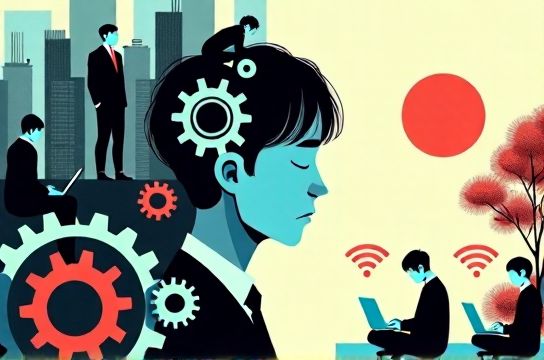
As a cultural analyst who’s been tracking digital discourse in China for over five years, I’ve noticed a shift: internet slang has evolved from playful teasing into a form of quiet resistance. It’s how young people process pressure—from sky-high housing costs to relentless work expectations. Let’s break down the most telling terms and what they reveal about society.
Why Slang Matters More Than Ever
In authoritarian environments where open political critique is risky, humor and irony become powerful tools. Slang lets users express frustration without crossing red lines. According to a 2023 Pew Research study, over 68% of Chinese netizens aged 18–35 use coded language online to discuss sensitive topics. That’s not coincidence—that’s strategy.
The Big Four: Decoding Key Terms
| Term | Literal Meaning | Social Context | Usage Growth (2020–2023) |
|---|---|---|---|
| 内卷 (nèijuǎn) | Involution | Excessive competition with no real gain | +340% |
| 躺平 (tǎngpíng) | Lying flat | Rejecting hustle culture | +520% |
| 脆皮青年 | Fragile Youth | Poor health due to stress | +280% |
| 数字游民 | Digital Nomad | Escaping urban grind | +410% |
Take neijuan, for example. Originally an academic term, it now describes students pulling all-nighters just to stay ahead—or employees working unpaid overtime because everyone else is. It’s not progress; it’s exhaustion disguised as productivity.
Then came tangping, the backlash. In 2021, a viral post declared, “I choose to lie flat.” No more promotions, no more saving for apartments. Just… stopping. The government didn’t love that. State media called it “pessimistic,” but the sentiment stuck. Why? Because burnout is real.
Health on the Line: Enter ‘Fragile Youth’
A 2022 survey by Peking University found that 46% of young workers reported chronic insomnia, while 39% had been diagnosed with anxiety disorders. That’s where cui pi qing nian—fragile youth—comes in. It’s self-deprecating, yes, but also painfully accurate. One user joked: “I’m not aging—I’m depreciating.”
And let’s talk escape. The rise of digital nomads isn’t just about remote work. It’s about fleeing first-tier cities. With rents eating 60–70% of incomes in Beijing or Shanghai, smaller cities or even Southeast Asia start looking appealing. Platforms like Lagou report a 410% increase in job postings tagged “remote” since 2020.
What This Means for Brands & Policymakers
If you’re marketing to Chinese youth, forget slogans about success. They’re tuning out. Authenticity wins. Look at brands like Bosideng or Li-Ning—they’ve embraced ‘low-key luxury’ and anti-hustle themes in campaigns, and sales are up.
For policymakers, this slang is a warning light. Ignoring it means missing the pulse of a generation. As one netizen put it: ‘We’re not lazy. We’re just tired of running on a treadmill that goes nowhere.’