
Online Buzzwords China Reveal Urban Lifestyle Shifts
- Date:
- Views:270
- Source:The Silk Road Echo
If you've been scrolling through Chinese social media lately, you’ve probably noticed some quirky new terms popping up—like ‘tang ping’ (lying flat) or ‘neijuan’ (involution). These aren’t just internet slang; they’re cultural signals pointing to major shifts in urban Chinese lifestyles. As a long-time observer of digital culture in China, I’ve tracked how these online buzzwords China reflect deeper societal trends—from work-life balance struggles to changing consumer habits.
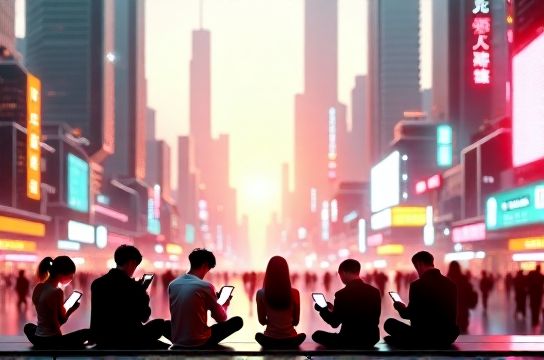
Take ‘neijuan’, for example. Originally an academic term, it now describes the exhausting cycle of overwork and competition with little return. A 2023 survey by Zhaopin found that 67% of white-collar workers in first-tier cities like Beijing and Shanghai feel trapped in high-pressure jobs with stagnant wages. This has led to a growing counter-movement: ‘tang ping’, or choosing to disengage from the rat race.
But it’s not all burnout. Another rising term is ‘dui hua zhe xue’ (the art of conversation), highlighting a renewed interest in meaningful human connection amid digital overload. Young professionals are ditching late-night work dinners for mindfulness workshops and small-group salons. In fact, attendance at offline experience events grew by 42% year-on-year in 2023 (source: iiMedia Research).
Here’s a snapshot of how these buzzwords translate into real-life behaviors:
| Buzzword | Literal Meaning | Social Behavior Shift | Supporting Data |
|---|---|---|---|
| Neijuan (内卷) | Involution | Overworking without advancement | 67% of urban workers report high stress (Zhaopin, 2023) |
| Tang Ping (躺平) | Lying Flat | Rejecting hustle culture | 41% consider downshifting careers (CNNIC) |
| Duihua Zhexue (对话哲学) | Art of Conversation | Seeking authentic connections | +42% growth in experiential events (iiMedia) |
| Kuilei (脆累) | Fragile Fatigue | Mental burnout despite rest | 58% show signs of emotional exhaustion (Peking University Study) |
What’s fascinating is how these shifts influence consumer behavior. Brands are adapting fast. For instance, co-living spaces like YOU+ International have seen occupancy rates jump 30% since 2022 by promoting community-driven living—an antidote to urban isolation. Similarly, mental wellness apps such as Calm City and Xiaoyu now boast over 20 million active users combined.
Even retail is changing. Instead of chasing luxury logos, younger shoppers are investing in ‘quiet luxury’—minimalist design, sustainable materials, and personal meaning. A McKinsey report notes that 54% of Gen Z consumers in China prioritize brand ethics over status.
So what does this mean for businesses? If your strategy still revolves around aggressive marketing or glorifying busyness, it’s time to rethink. The new urban ideal isn’t about winning the race—it’s about stepping off the treadmill. Authenticity, balance, and human connection are now the true status symbols.
In short, these Chinese internet slang terms aren’t fleeting memes—they’re early warnings and opportunities. Whether you're a marketer, policymaker, or just curious about modern China, pay attention. The way people talk online today shapes the cities, markets, and mindsets of tomorrow.