
Why Chinese Buzzwords Dominate Asian Social Media Now
- Date:
- Views:407
- Source:The Silk Road Echo
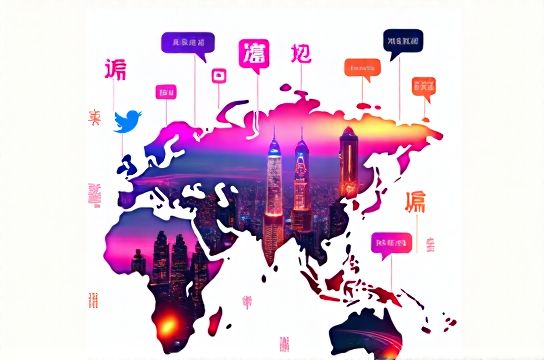
If you've been scrolling through TikTok, Instagram, or even Twitter in Asia lately, you’ve probably noticed something: more and more Chinese buzzwords are popping up — even among non-Mandarin speakers. From “内卷 (involution)” to “躺平 (lying flat),” these terms aren’t just slang; they’re cultural movements wrapped in three-syllable phrases. So why are Chinese internet trends spreading like wildfire across Southeast Asia, Korea, and Japan? Let’s break it down.
The Rise of Emotional Resonance
Unlike traditional loanwords that enter languages via technology or fashion, today’s viral Chinese buzzwords carry deep social commentary. They reflect shared anxieties about overwork, economic pressure, and generational burnout — issues that resonate strongly across Asia.
Take “内卷,” literally meaning 'involution.' Originally an academic term, it now describes the exhausting rat race where people work harder for no real gain. A 2023 survey by the Asian Youth Research Network found that 68% of urban millennials in Jakarta, Seoul, and Bangkok identified with this concept — even without knowing Mandarin.
| Buzzword | Literal Meaning | Social Theme | Regional Reach (Est.) |
|---|---|---|---|
| 内卷 (nèijuǎn) | Involution | Workplace competition | 7 countries |
| 躺平 (tǎngpíng) | Lying flat | Anti-hustle culture | 6 countries |
| 社死 (shèsǐ) | Social death | Public embarrassment | 5 countries |
| 凡尔赛 (fán'ěrsài) | Versailles | Humblebragging | 4 countries |
As seen above, each phrase taps into a universal emotion, making them highly shareable. Platforms like Xiaohongshu (Little Red Book) and Bilibili act as incubators, but it's regional influencers who amplify them. In Vietnam, for example, Gen Z creators use "táng píng" as a hashtag when posting about quitting toxic jobs — often without translating it.
Platform Parallels Boost Spread
Another reason? The structural similarity between Chinese apps and their regional counterparts. Douyin = TikTok. WeChat Moments = LINE Timeline. This mirroring makes content adaptation seamless.
A 2024 report from DataReportal shows that users in Thailand spend an average of 3.7 hours daily on short-video platforms — nearly identical to China’s 3.9 hours. With similar usage patterns, meme formats, and algorithmic feeds, viral Chinese expressions slide easily into local contexts.
Cultural Proximity & Linguistic Borrowing
Let’s not forget historical ties. Many East and Southeast Asian languages already share Chinese-derived characters or vocabulary roots. This lowers the barrier for adoption. For instance, Japanese netizens instantly grasp “社死” because “社” (community) and “死” (death) exist in kanji with similar meanings.
Even pronunciation helps. Thanks to Pinyin and romanization, sounds like “nei juan” are easy to mimic — turning linguistic novelty into online identity.
What’s Next?
As long as young Asians face similar pressures — housing crises, job insecurity, digital overload — expect more Chinese buzzwords to go regional. The next wave might come from livestream commerce lingo or AI-related slang emerging from Shenzhen tech hubs.
Bottom line? These aren’t just passing fads. They’re linguistic snapshots of a generation redefining success, one viral phrase at a time.