
Why Chinese Internet Slang Reflects Social Mood
- Date:
- Views:310
- Source:The Silk Road Echo
If you've spent any time browsing Chinese social media—think Weibo, Xiaohongshu, or Douyin—you’ve probably stumbled upon phrases like 内卷 (nèijuǎn), 躺平 (tǎngpíng), or 社死 (shèsǐ). These aren’t just random buzzwords. They’re cultural barometers, reflecting the real anxieties, humor, and coping mechanisms of modern Chinese youth.
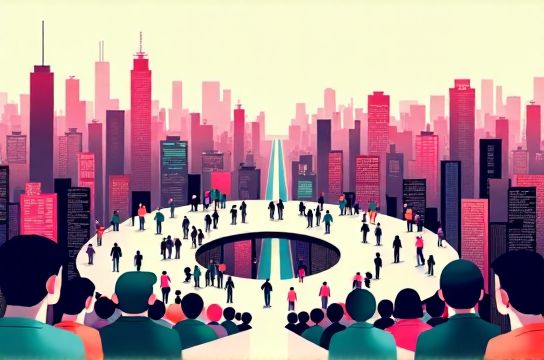
As a cultural analyst who’s been tracking digital trends in China for over five years, I’ve noticed something powerful: Chinese internet slang doesn’t just follow trends—it predicts them. Let me break down why these terms matter, what they reveal about society, and how they evolve faster than any government white paper.
The Psychology Behind the Memes
Take 内卷 (involution), for example. Originally an anthropological term, it went viral around 2020 to describe the feeling of working harder for no real gain—like students pulling all-nighters just to outdo each other with zero payoff. A 2023 survey by Peking University found that 68% of urban millennials identify with the term, seeing it as a critique of systemic overcompetition.
Then came 躺平—literally 'lying flat'—a passive resistance movement encouraging people to opt out of the grind. It sparked national debate, with state media criticizing it as 'defeatist.' But behind the backlash? A generation burned out by long work hours and sky-high housing costs.
| Slang Term | Literal Meaning | Social Insight | Peak Usage (Baidu Index) |
|---|---|---|---|
| 内卷 (nèijuǎn) | Involution | Futility of over-effort in competitive systems | 9,400 (Jan 2021) |
| 躺平 (tǎngpíng) | Lying flat | Resistance to societal pressure | 7,200 (May 2021) |
| 社死 (shèsǐ) | Social death | Fear of public embarrassment | 5,100 (Mar 2022) |
| 破防 (pòfáng) | Breach of defense | Emotional vulnerability | 6,800 (Nov 2021) |
From Joke to Journal Entry
What makes these terms stick? They’re relatable. While official discourse talks about 'national rejuvenation,' netizens use slang to whisper, 'I’m exhausted.' This isn’t rebellion—it’s realism.
Even brands have caught on. In 2022, beverage giant Nongfu Spring launched a campaign using 社死 in ads about awkward first dates, boosting engagement by 40%. When language mirrors lived experience, it sells.
Why This Matters Beyond China
Globally, we’re seeing similar patterns—'quiet quitting' in the U.S., 'burnout' in Europe. But China’s digital culture moves faster. With over 1.05 billion internet users, its slang spreads like wildfire, often outpacing policy responses.
So next time you see a meme about 'lying flat,' don’t dismiss it as laziness. It’s a cry for balance in a world that never stops demanding more.