
From Bilibili to WeChat Memes Crossing Borders
- Date:
- Views:312
- Source:The Silk Road Echo
If you've spent even five minutes scrolling through Chinese social media, you’ve probably seen it: a pixelated Xiao Ming facepalming, a dramatic guoshi (ancient style) cat blinking slowly, or that one crying anime girl who shows up in every WeChat group when someone says 'I failed my exam.'
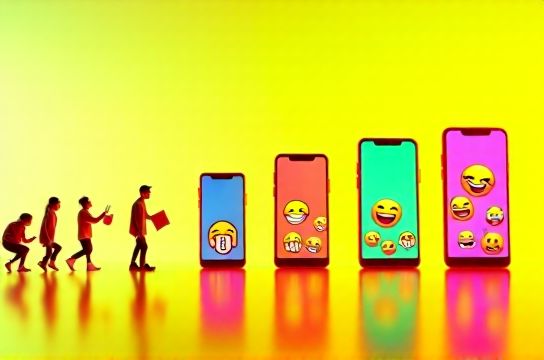
Welcome to the wild world of Chinese internet memes — where Bilibili’s anime-loving teens collide with WeChat uncles sharing politically-tinged jokes in family groups. It’s chaotic, hilarious, and surprisingly deep if you know where to look.
But how do these memes travel from niche video comments on Bilibili to mass-forwarded stickers in WeChat? And why do some go viral across borders while others fizzle out?
The Lifecycle of a Chinese Meme
Unlike Western memes that often start on Reddit or Twitter, Chinese memes thrive in closed ecosystems. Bilibili, with over 330 million monthly active users (2024 data), is the meme incubator. Its barrage-comment (danmu) system lets users flood videos with real-time reactions — turning moments into inside jokes.
Take “Emo Brother” — a guy sobbing in a music video. Within days, Bilibili creators remixed him into historical dramas, sci-fi battles, and even cooking tutorials. Then came the WeChat phase: stickers, mini-games, and voice clips. By month three, he was in Taobao product listings.
Platform Dynamics: Where Memes Live and Die
Each platform plays a role. Here's how they stack up:
| Platform | User Base | Meme Role | Viral Speed (Avg. Days) |
|---|---|---|---|
| Bilibili | 330M MAU | Incubation Lab | 1–3 |
| 1.3B MAU | Mass Distribution | 3–7 | |
| Douyin | 750M MAU | Visual Amplifier | 1–2 |
| Little Red Book | 300M MAU | Niche Aesthetic Filter | 5–10 |
Notice the pattern? Bilibili sparks it, Douyin accelerates it, but WeChat owns distribution. That’s because 82% of Chinese users are in family or work chat groups where memes spread like digital gossip.
Crossing the Great Firewall? Good Luck.
Most Chinese memes never leave the mainland. Why? Three reasons:
- Context Collapse: Jokes about Gaokao stress or housing prices don’t translate.
- Censorship Filters: Even silly memes get flagged if they hint at dissent.
- Platform Isolation: No TikTok integration means limited global reach.
But exceptions exist. The 'Lying Flat' (Tang Ping) movement started as a meme about quitting hustle culture and blew up from Zhihu threads to BBC headlines. Similarly, 'Neijuan' (involution) became a global buzzword for burnout.
So What’s Next?
As Gen Z blurs lines between entertainment and commentary, memes are becoming stealth social critique. A dancing panda on Bilibili might seem dumb — until you realize it’s mocking rigid workplace norms.
And with AI tools making remixing easier, expect faster mutation cycles. One analyst predicts meme lifespan will drop from 21 days in 2022 to under 7 by 2026.
In short: Chinese internet culture isn’t just copying the West. It’s evolving its own language — one sticker at a time.