
Online Buzzwords China Unpack the Hidden Meaning Behind Popular Terms
- Date:
- Views:271
- Source:The Silk Road Echo
Ever scrolled through Chinese social media and felt like everyone’s speaking a secret code? You’re not alone. From neijuan to tang ping, China’s online buzzwords are more than just slang—they’re cultural flashpoints, social critiques, and sometimes, quiet rebellions wrapped in irony. Let’s decode the lingo that’s shaping how young Chinese people express stress, survival, and sarcasm in the digital age.
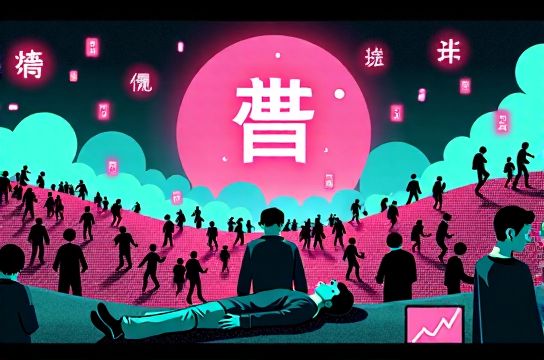
Why Do Chinese Netizens Invent So Many Buzzwords?
In a tightly regulated internet space, direct criticism is risky. That’s where creativity kicks in. Online communities use metaphors, puns, and memes to discuss sensitive topics—like work pressure or inequality—without triggering censorship. These terms often go viral on platforms like Weibo, Douyin, and Xiaohongshu, evolving fast and reflecting real-time social moods.
Top 5 Must-Know Chinese Internet Slang Terms (With Data)
Here’s a breakdown of the most impactful buzzwords in 2023–2024, based on Baidu Index search volume and Weibo trending data:
| Buzzword | Literal Translation | Meaning | Baidu Index (Monthly Avg) | Peak Trend Period |
|---|---|---|---|---|
| 内卷 (nèijuǎn) | Involution | Excessive competition with no real gain—e.g., working overtime just because others do. | 186,500 | Apr 2023 |
| 躺平 (tǎng píng) | Lying flat | Rejecting societal pressure to overachieve; opting out of the rat race. | 94,200 | Jun 2023 |
| 打工人 (dǎ gōng rén) | Working stiff | Sarcastic term for salaried employees; highlights grind culture. | 73,800 | Mar 2024 |
| 小镇做题家 | Small-town test-taker | Graduates from rural areas who excel academically but struggle in elite job markets. | 41,500 | Aug 2023 |
| 脆皮大学生 | Fragile college student | Gen Z students physically/emotionally fragile due to academic stress. | 58,300 | Nov 2023 |
What These Words Reveal About Modern China
These aren’t just trendy phrases—they’re symptoms. Take neijuan: it started in academia but now describes everything from parenting to property prices. It reflects a growing fear that no matter how hard you work, you’re not getting ahead. Meanwhile, tang ping became a quiet anthem for burnout, sparking national debate about youth disillusionment.
And let’s talk about dagongren. It’s funny, sure—but also tragic. By calling themselves ‘laborers,’ office workers mock the illusion of white-collar prestige. It’s self-deprecation as resistance.
The Lifecycle of a Chinese Buzzword
Most viral terms follow this path:
- Birth: Coined by a netizen or blogger.
- Viral Surge: Picked up by influencers and meme pages.
- Media Attention: State outlets weigh in—sometimes condemning, sometimes co-opting.
- Decline: Overuse or official pushback kills the trend—or turns it into a nostalgic reference.
How to Stay Updated
New terms pop up daily. Follow hashtags like #网络热词 (online buzzwords) on Weibo, or check Xiaohongshu threads where users explain slang with memes. Just remember: context is king. A word like 摆烂 (bǎi làn)—‘letting things rot’—might sound lazy, but it’s often a coping mechanism, not laziness.
In short, Chinese internet slang is a mirror. It shows frustration, humor, and resilience—all coded in clever wordplay. So next time you see neijuan, don’t just translate it. Understand it.