
Exploring Chinese Internet Slang in 2024 Daily Expressions That Define China's Online Youth Culture and Digital Identity
- Date:
- Views:294
- Source:The Silk Road Echo
If you've scrolled through Chinese social media in 2024, you’ve probably seen phrases like zui fan le (最烦了) or wo si le (我死啦) — no, nobody’s actually dying. Welcome to the wild, witty world of Chinese internet slang, where emotions are exaggerated, sarcasm is king, and every feeling gets a meme-worthy twist.
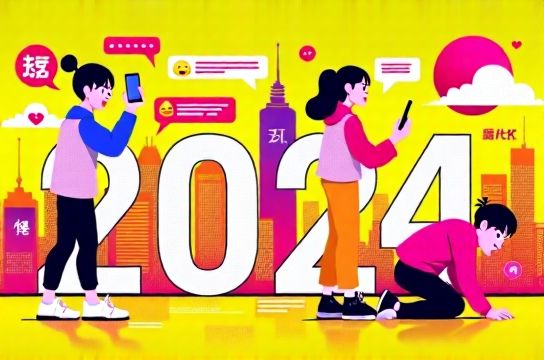
China’s digital youth aren’t just chatting — they’re crafting a whole new linguistic identity. With over 1.05 billion internet users (CNNIC, 2024), mostly under 35, online expression has evolved into a cultural force. Let’s decode the lingo that’s shaping conversations from Weibo to Xiaohongshu.
Why Is Chinese Internet Slang So Unique?
Unlike Western memes that rely heavily on visuals, Chinese netizens blend phonetic puns, classical references, and pop culture into compact, expressive phrases. Censorship also plays a role — creative slang often acts as a workaround for sensitive topics.
Take nei juan (内卷), meaning 'involution' — it started as an academic term but now describes cutthroat workplace competition. Or tang ping (躺平), 'lying flat,' symbolizing Gen Z’s quiet rebellion against hustle culture.
Top 5 Must-Know Slang Terms in 2024
Here’s your cheat sheet to sounding like a native digital local:
| Slang Term | Pinyin | Literal Meaning | Actual Use | Popularity Index* |
|---|---|---|---|---|
| 社死 | shè sǐ | Social death | Extreme embarrassment, e.g., tripping in public | ⭐⭐⭐⭐☆ (4.8) |
| 破防了 | pò fáng le | Defense broken | Emotionally overwhelmed, moved, or triggered | ⭐⭐⭐⭐★ (4.9) |
| 绝绝子 | jué jué zǐ | Ultra-son | Sarcastic praise or genuine awe | ⭐⭐⭐☆☆ (3.7) |
| 摆烂 | bǎi làn | Let it rot | Intentionally doing poorly to avoid stress | ⭐⭐⭐⭐☆ (4.6) |
| 电子榨菜 | diàn zǐ zhà cài | Electronic pickles | Binge-watching shows while eating alone | ⭐⭐⭐★☆ (4.4) |
*Based on Baidu Index and Weibo trending data, January–June 2024
The Cultural Pulse Behind the Words
These terms aren’t just funny — they reflect real societal shifts. Tang ping and bǎi làn echo growing disillusionment with traditional success metrics. Meanwhile, diàn zǐ zhà cài highlights the rise of solo living and digital comfort in urban China.
According to a 2024 Tencent survey, 68% of users aged 18–29 say internet slang helps them feel part of a community. It’s not just language — it’s belonging.
How to Use These Terms Like a Pro
- 社死 (shè sǐ): "I wore my sweater inside out to class — total she si moment." 😳
- 破防了 (pò fáng le): "That puppy adoption ad — I’m po fang le." 💔
- 电子榨菜 (diàn zǐ zhà cài): "Watching *My Happy Marriage* while eating instant noodles? Classic electronic pickles." 🍜📱
Just remember: context is everything. Overuse = cringe. Right moment = instant cool points.
The Future of Digital Chinese
As AI-generated content and short videos dominate, expect even more visual-text hybrids — think emojis fused with slang, or voice filters that auto-say "wo tai nan le" (I’m too sad) when you sigh.
But one thing’s clear: Chinese internet slang isn’t fading. It’s evolving — fast, fierce, and full of feeling.
So next time you see "zui fan le" in a comment, don’t panic. They’re just venting. And now? You’re fluent in the unspoken language of China’s digital generation.