
Behind the Laughter: What Memes Reveal About Youth Anxiety in Urban China
- Date:
- Views:283
- Source:The Silk Road Echo
Let’s be real—scroll through any Chinese social media feed, and you’ll see it: memes. Endless memes. A panda with dead eyes sipping bubble tea. A cartoon student sweating bullets while whispering 'I’m fine.' Office workers turned into zombies dragging their briefcases. They’re funny, shareable, sometimes absurd—but here’s the thing: behind all that laughter is a quiet scream.
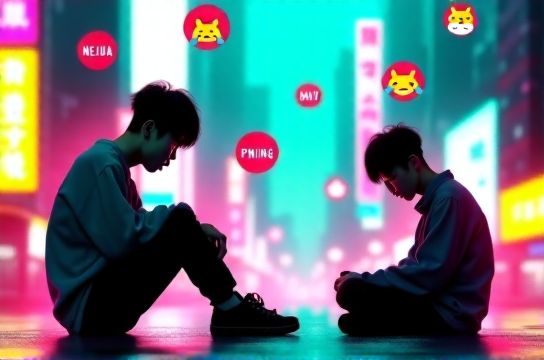
In urban China, especially among Gen Z and young millennials, internet humor isn’t just entertainment. It’s survival. As cities like Beijing, Shanghai, and Shenzhen pulse with ambition, the pressure cooker underneath is boiling over. And instead of breaking down, a whole generation is cracking jokes.
Take the phrase 'neijuan'—literally 'involution.' It started as an academic term but now describes the endless grind: working overtime for no extra pay, competing for promotions that never come, studying 18 hours a day just to stay average. Sound familiar? Instead of writing essays about burnout, young people post memes of themselves as hamsters running on a wheel labeled '996 life.' Dark? Yeah. Relatable? Even more.
Then there’s 'tang ping'—'lying flat.' On the surface, it’s about rejecting hustle culture. In meme form, it’s a character sprawled on the floor eating instant noodles, captioned: 'Ambition? I’ve unsubscribed.' But let’s not romanticize it. This isn’t laziness—it’s exhaustion. These jokes are armor. When you can’t change the system, you mock it. You turn your anxiety into art.
And the platforms? WeChat moments, Xiaohongshu, Douyin—they’re not just for selfies and shopping hauls. They’re digital confession booths. A meme about failing a job interview might get 50K likes and hundreds of comments like 'Same.' 'Me every Tuesday.' 'This is my life.' It’s not just humor; it’s community. A way to say, 'I’m struggling too,' without actually saying it.
Even the visuals tell a story. Muted colors. Crowded cityscapes. Characters with blank stares or exaggerated panic. The aesthetic screams urban isolation. Yet the tone stays playful. Why? Because in a culture where mental health is still stigmatized, you can’t just say 'I’m depressed.' But you *can* post a meme of a dumpling crying in a soup bowl with the text: 'Why am I so full of water today?' Everyone gets it.
So what does this mean? That Chinese youth aren’t just laughing—they’re coping. These memes are low-key cries for help, wrapped in irony and pixelated faces. They reveal a generation caught between sky-high expectations and shrinking opportunities. Between filial duty and personal dreams. Between silence and self-expression.
And honestly? It’s genius. You can’t censor a sad frog with a tie. You can’t punish someone for sharing a comic about rent prices. But those images carry weight. They build solidarity. They keep people from feeling alone.
The next time you see a weird meme from urban China, don’t just laugh. Look closer. There’s a story in there. One of stress, yes—but also resilience, creativity, and quiet rebellion. Because sometimes, the loudest truths come in the funniest packages.