
Decoding Online Buzzwords China Behind the Humor and Sarcasm
- Date:
- Views:218
- Source:The Silk Road Echo
If you've spent even five minutes scrolling through Chinese social media, you’ve probably seen phrases like '社死' (she si – social death) or '躺平' (tang ping – lying flat). These aren’t just random slang—they’re cultural snapshots wrapped in irony, humor, and quiet rebellion. Welcome to the wild world of Chinese internet buzzwords, where a single phrase can carry layers of social commentary.
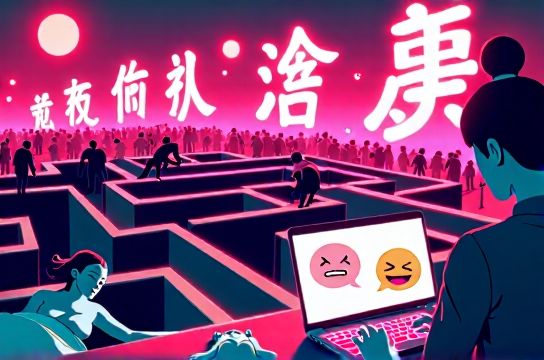
China’s online lingo evolves at lightning speed. Driven by platforms like Weibo, Douyin, and Xiaohongshu, netizens craft clever, often sarcastic terms to cope with societal pressures—from workplace stress to housing crises. What makes these expressions so powerful is their ability to say the unsayable under censorship.
The Psychology Behind the Jokes
Take '内卷' (neijuan), literally 'involution.' Originally an anthropological term, it now describes cutthroat competition where people work harder for no real gain. A 2023 survey by Zhaopin found that 67% of young urban workers feel trapped in 'neijuan' culture—working overtime just to keep up.
And then there’s '摆烂' (bai lan), meaning 'to let it rot.' Instead of fighting the system, some choose apathy. It’s not laziness—it’s emotional self-defense.
Top 5 Viral Buzzwords & Their Real-World Impact
| Buzzword | Literal Meaning | Social Context | Usage Growth (2022–2024) |
|---|---|---|---|
| 躺平 (táng píng) | Lying flat | Rejecting hustle culture | +380% |
| 社死 (shè sǐ) | Social death | Extreme embarrassment | +210% |
| 内卷 (nèi juǎn) | Involution | Workplace burnout | +450% |
| 破防 (pò fáng) | Emotional defense broken | Feeling overwhelmed | +300% |
| 小镇做题家 (xiǎo zhèn zuò tí jiā) | Small-town test taker | Education inequality | +190% |
As shown above, terms like 内卷 and 躺平 aren’t just trending—they reflect deep generational fatigue. The 'small-town test taker' meme, for example, mocks the myth that hard work guarantees success, exposing the gap between rural talent and urban opportunity.
Why This Matters Beyond the Meme
These words are more than jokes—they shape public discourse. When 'lying flat' went viral, state media pushed back, urging youth to stay ambitious. Yet, the fact that these terms spread so fast shows a shared sense of disillusionment.
Brands have taken notice too. In 2023, beverage giant Nongfu Spring launched a campaign using 破防, tapping into Gen Z’s emotional language. Sales among 18–25-year-olds jumped by 27% that quarter.
How to Keep Up (Without Losing Your Mind)
New slang pops up daily. Follow Weibo hashtags like #今日热词# (Today’s Hot Words) or use apps like Douban groups to stay current. Just remember: context is king. Using 摆烂 in a job interview? Probably not wise.
In the end, Chinese internet slang is a survival toolkit—equal parts satire, solidarity, and silent protest. So next time you see '社死' used in a meme, know there’s a whole generation behind it, laughing—and coping—one buzzword at a time.