
Explaining Chinese Buzzwords From TikTok to Weibo What Everyone Is Saying
- Date:
- Views:251
- Source:The Silk Road Echo
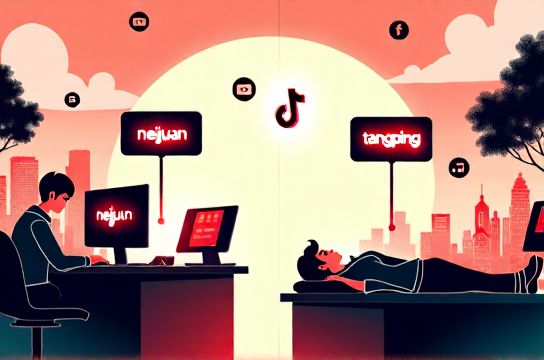
If you've scrolled through Chinese social media lately—whether on Douyin (TikTok), Weibo, or Xiaohongshu—you’ve probably seen phrases like “内卷” or “躺平” pop up everywhere. These aren’t just random words—they’re cultural signals, emotional reactions, and sometimes even protest slogans disguised as internet slang. Let’s decode the hottest Chinese buzzwords sweeping the digital world in 2024.
Why Are These Buzzwords So Powerful?
In China’s hyper-competitive society, young people use humor and irony to cope with stress, job pressure, and societal expectations. These buzzwords are more than memes—they reflect real anxieties and shifting mindsets. Think of them as emotional shorthand for a generation navigating economic slowdowns and sky-high living costs.
Top 5 Chinese Buzzwords You Need to Know
- 内卷 (Nèijuǎn) – Involution
Literally meaning "involution," this term describes a situation where everyone works harder but no one gets ahead. It’s like running on a treadmill: exhausting, but going nowhere. A 2023 survey by Peking University found that 68% of urban youth feel trapped in some form of “neijuan,” especially in education and tech jobs. - 躺平 (Tǎngpíng) – Lie Flat
The anti-hustle movement. After years of burnout, many young Chinese are choosing to “lie flat”—rejecting overwork and minimalizing life goals. It’s not laziness; it’s resistance. According to iResearch, searches for “躺平 lifestyle” grew by 210% year-on-year in 2023. - 摆烂 (Bǎilàn) – Let It Rot
Even more extreme than 躺平. This means giving up entirely—no effort, no expectations. It’s the digital shrug of defeat. Popular among Gen Z facing bleak job markets. - 破防 (Pòfáng) – Emotional Breakdown
Originally from gaming (breaking a defense), now used when someone gets emotionally overwhelmed—by a touching story, bad news, or nostalgia. On Weibo, #破防# has been used over 4.2 billion times. - 社死 (Shèsǐ) – Social Death
That cringe moment when you embarrass yourself in public—like calling your teacher “mom” in class. Widely shared in meme format on Douyin, often with dramatic music and slow-motion effects.
Buzzword Usage Across Platforms (2023 Data)
| Buzzword | Weibo Posts (Billions) | Douyin Views (Billions) | Main User Group |
|---|---|---|---|
| 内卷 | 3.8 | 12.5 | 20–30 year olds |
| 躺平 | 2.9 | 9.7 | Post-95s |
| 摆烂 | 1.6 | 6.3 | Gen Z |
| 破防 | 4.2 | 15.1 | All ages |
| 社死 | 3.1 | 10.8 | Teens & Twenties |
Source: Sina Weibo Data Center, Douyin Trends Report 2023
The Bigger Picture
These words aren’t just trends—they’re symptoms. They reveal a generation redefining success. While the government promotes hard work, netizens are pushing back with dark humor and quiet rebellion. Some terms get censored (like 躺平 in official media), but they keep evolving—proving just how resilient online expression can be.
So next time you see “破防了” in a comment, don’t just scroll past. It might be someone saying, “I’m not okay”—in the only way they feel safe to say it.