
Explaining Chinese Buzzwords From TikTok to Mainstream Talk
- Date:
- Views:218
- Source:The Silk Road Echo
If you've been scrolling through Chinese social media—especially TikTok (or its local twin, Douyin)—you’ve probably stumbled upon phrases like neijuan, tangping, or baizuo. These aren’t just slang; they’re cultural snapshots of a generation navigating pressure, identity, and societal change. Let’s decode the buzz.
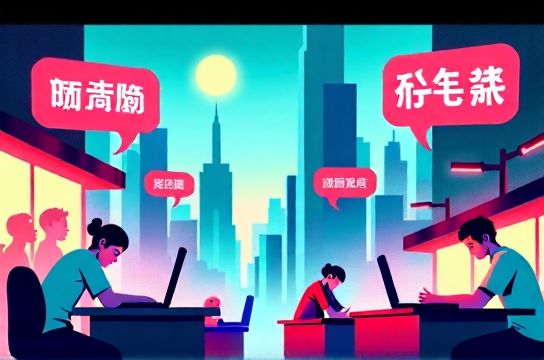
Why Do Chinese Internet Slang Terms Go Viral?
In China’s hyper-connected digital world, internet slang evolves at lightning speed. What starts as a joke in a livestream or meme can spiral into national discourse. These terms often reflect deeper social tensions—economic anxiety, workplace burnout, generational clashes—packaged in witty, ironic language.
Take 内卷 (neijuan), literally 'involution'. It describes cutthroat competition where everyone works harder but gains nothing. A student studies 16 hours a day; another responds with 18. No one wins. According to a 2023 survey by Peking University, over 68% of urban youth feel trapped in 'neijuan' cycles, especially in education and tech jobs.
Then came the backlash: 躺平 (tangping), or 'lying flat'. It’s the art of opting out—rejecting relentless hustle culture. In 2021, a viral post from a young man who quit his job to live on 200 yuan ($28) a month sparked nationwide debate. Is it enlightenment or escapism? Either way, it struck a nerve.
The Rise of Political & Social Slang
Some terms carry sharper edges. 白左 (baizuo), meaning 'white left', critiques Western liberal hypocrisy—think performative activism without real solutions. It’s popular among Chinese netizens skeptical of foreign moralizing.
Meanwhile, 社死 (she si), short for 'social death', captures that cringe moment when you trip in public or send a text to the wrong person. Urban millennials relate hard. A ByteDance report found 'she si'-related videos garnered over 7 billion views in 2022 alone.
| Buzzword | Literal Meaning | Social Context | Popularity Index* |
|---|---|---|---|
| 内卷 (neijuan) | Involution | Work/education burnout | 9.4/10 |
| 躺平 (tangping) | Lying flat | Anti-hustle movement | 8.7/10 |
| 社死 (she si) | Social death | Public embarrassment | 7.9/10 |
| 凡尔赛 (fan er sai) | Versailles | Humblebragging | 8.1/10 |
| 打工人 (da gong ren) | Working stiff | Blue-collar solidarity | 9.0/10 |
*Based on Baidu Index and Weibo trends, 2023 average
From Meme to Mainstream
What’s fascinating is how quickly these words jump from TikTok captions to newspaper editorials. State media has even used tangping to discuss labor policy reforms. That’s the power of internet linguistics—it doesn’t just describe reality; it shapes it.
And let’s not forget 凡尔赛 (fan er sai), a dig at those who 'modestly' flaunt wealth. 'Ugh, another boring trip to Paris,' says the influencer. The term exploded after a celebrity’s faux-complaint went viral. Now, it’s a full-blown satire genre.
The Bottom Line
Chinese internet slang isn’t just playful wordplay—it’s a survival toolkit. In a fast-moving society, humor becomes resistance, irony becomes insight. Whether you're battling neijuan or embracing tangping, these buzzwords are your cultural GPS.
So next time you hear 'baizuo' or 'she si', don’t just laugh—listen. There’s a whole generation talking.