
Decoding Chinese Buzzwords Behind Social Media Frenzy
- Date:
- Views:228
- Source:The Silk Road Echo
If you've scrolled through Chinese social media lately, you've probably seen phrases like 内卷 (nèijuǎn), 躺平 (tǎngpíng), or 打工人 (dǎgōngrén) popping up everywhere. These aren't just trendy slang—they're cultural snapshots of a generation navigating pressure, identity, and survival in modern China.
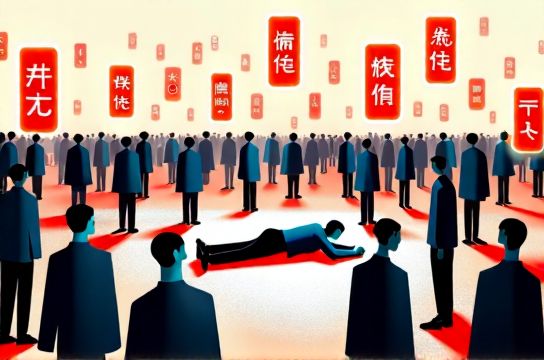
Why Buzzwords Matter
In a tightly censored digital space, coded language thrives. Young netizens use irony, humor, and metaphor to express frustration with work culture, housing prices, and societal expectations. These buzzwords are more than memes—they’re resistance wrapped in wit.
The Big Three: What They Really Mean
- 内卷 (Nèijuǎn) – Involution: Imagine running on a treadmill that keeps speeding up. That’s nèijuǎn. It describes the exhausting competition where people work harder for no real gain. A 2023 Peking University study found 68% of urban white-collar workers feel trapped in 'involution loops'—working overtime just to stay even.
- 躺平 (Tǎngpíng) – Lie Flat: The backlash to burnout. Instead of fighting the system, some choose minimal effort—rejecting promotions, living frugally, and opting out of marriage or home ownership. Though only 12% fully embrace it, 45% admit they’ve considered it (China Youth Daily, 2022).
- 打工人 (Dǎgōngrén) – Laborer: Once a neutral term, now laced with sarcasm. Calling yourself a 'worker bee' mocks the glorification of overwork. Memes show exhausted office staff saying, 'Another day, another soul crushed.'
Buzzword Breakdown: Usage & Sentiment
| Buzzword | Literal Meaning | Popularity Index* | Sentiment |
|---|---|---|---|
| 内卷 (nèijuǎn) | Involution | 9.7/10 | Negative |
| 躺平 (tǎngpíng) | Lie Flat | 8.5/10 | Mixed |
| 打工人 (dǎgōngrén) | Worker | 9.0/10 | Sarcastic |
| 摆烂 (bǎilàn) | Let it rot | 7.2/10 | Defiant |
*Based on Baidu Index and Weibo mentions (2023 average)
From Meme to Movement
These words started online but spilled into real life. Cafés offer 'lie flat' discounts. Job seekers list 'anti-996' as a requirement. Even state media can’t ignore them—People's Daily once criticized 'lying flat' as 'unproductive,' sparking massive backlash.
The Global Echo
You’ll find parallels worldwide: South Korea’s 'escape the hell' trend, Japan’s 'ikigai' fatigue, or America’s 'quiet quitting.' But China’s version is uniquely sharp—born from hyper-competition and rising youth disillusionment.
What’s Next?
New terms emerge fast. 润 (rùn)—slang for 'to flee'—surged after pandemic lockdowns, reflecting emigration dreams. Meanwhile, the government pushes 'positive energy' slogans, creating a linguistic tug-of-war.
Understanding these buzzwords isn’t just about language—it’s about reading the mood of a generation. In a world where speaking too plainly can be risky, how we joke says everything.