
How Meme Culture China Reflects Social Sentiments
- Date:
- Views:199
- Source:The Silk Road Echo
In the digital age, memes aren’t just jokes—they’re cultural fingerprints. Nowhere is this more evident than in China’s meme culture, where internet users cleverly use humor to navigate censorship, express frustration, and build online communities. From sarcastic GIFs to absurd animal edits, Chinese netizens have turned meme-making into an art of subtle resistance and social commentary.
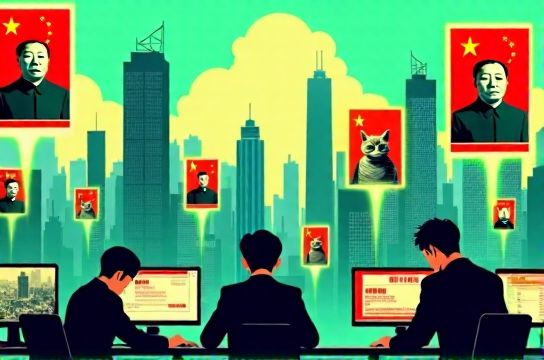
Unlike Western memes that often go viral for pure entertainment, Chinese memes frequently carry layered meanings—coded messages about everything from economic stress to political fatigue. Platforms like Weibo, Douban, and Bilibili are hotbeds for these digital expressions, where a panda yawning can symbolize public apathy toward government propaganda, or a duck walking slowly might mock the ‘lying flat’ (躺平) movement.
Take the rise of the ‘Tang Ping’ (lying flat) meme. It emerged in 2021 as a response to China’s grueling 996 work culture (9 AM–9 PM, 6 days a week). Instead of rebelling outright, young workers shared images of people napping, snails moving slowly, or potatoes labeled ‘I do nothing.’ These weren’t lazy—they were quiet protests. According to a 2022 survey by Zhihu, over 62% of respondents aged 18–30 admitted resonating with the lying flat mindset, citing burnout and unaffordable housing as key reasons.
Another iconic example? The ‘Scream Rabbit’ (咆哮兔), a wide-eyed cartoon rabbit often photoshopped into dystopian office scenes. It became a symbol of workplace anxiety, especially among white-collar workers in tech hubs like Shenzhen and Hangzhou. On Bilibili, videos featuring the Scream Rabbit racked up over 45 million views in six months.
Why Memes Matter in China’s Digital Landscape
Censorship makes direct criticism risky. So, Chinese netizens rely on irony, surrealism, and wordplay. Homophones are especially popular—like using ‘grass’ (草, cǎo) to mean ‘lol’ (because it sounds like the English ‘cao’). This linguistic creativity keeps memes under the radar while still spreading fast.
Here’s a quick look at how meme themes correlate with real-world concerns:
| Meme Theme | Social Issue | Platform Reach (Monthly Views) |
|---|---|---|
| Lying Flat (Tang Ping) | Workplace Burnout | Over 200 million |
| Scream Rabbit | Corporate Stress | ~150 million |
| Frog Dad vs. Little Frog | Parental Pressure & Education | ~90 million |
| Dream Island (Meng Li Dao) | Economic Uncertainty | ~75 million |
These numbers aren’t just clicks—they reflect real emotional resonance. Memes become coping mechanisms, allowing people to laugh at their struggles without crossing red lines.
Moreover, meme culture fosters solidarity. When a post about ‘involution’ (内卷)—the idea of working harder for no gain—goes viral, it’s not just funny; it validates shared experiences. A 2023 Peking University study found that 70% of urban youth felt ‘seen’ by relatable memes, compared to only 35% who trusted mainstream media.
Still, it’s a double-edged sword. Authorities occasionally crack down on ‘negative energy’ memes. In 2022, several meme accounts on WeChat were suspended for promoting ‘pessimism.’ Yet, new ones pop up instantly—proving just how deeply rooted this form of expression has become.
In essence, Chinese meme culture is more than internet humor. It’s a mirror held up to society—a way for millions to say, ‘We’re tired,’ ‘This is unfair,’ or ‘We need change,’ all while smiling. And as long as pressure builds behind closed doors, the memes will keep coming—funny, fierce, and quietly revolutionary.