
From ‘Geili’ to ‘Xiaoxi’: Tracing 15 Years of Chinese Internet Linguistic Innovation
- Date:
- Views:326
- Source:The Silk Road Echo
You’ve probably heard terms like ‘geili’ or ‘xiaoxi’ floating around online—but do you know where they came from? Over the past 15 years, Chinese internet slang has exploded into a cultural phenomenon, shaping how millions communicate every day. From playful abbreviations to sarcastic memes, these expressions aren’t just random noise—they reflect social shifts, youth rebellion, and digital creativity at its finest.
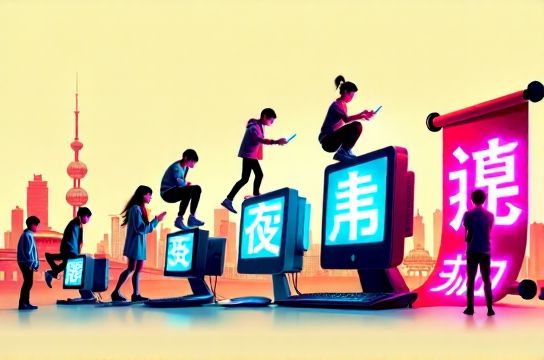
Let’s rewind to the late 2000s. The word ‘geili’ (给力), meaning 'awesome' or 'impressive,' went viral after being used in an anime dub that fans loved. It was one of the first internet-born terms to break into mainstream media—even appearing in state-run newspapers! This marked a turning point: netizens realized their slang could influence real-world language.
Fast forward to the 2010s, and things got wilder. Abbreviations like ‘xswl’ (笑死我了, 'laughing so hard I died') and ‘yyds’ (永远滴神, 'eternal god') took over comment sections. Why type long phrases when four letters can say it all? These shorthand codes became badges of belonging—proof you were fluent in the unspoken rules of online China.
Then came the era of irony and self-deprecation. Terms like ‘tang ping’ (躺平, 'lying flat') and ‘neijuan’ (内卷, 'involution') captured growing anxiety among young people facing intense work pressure and sky-high housing costs. ‘Tang ping’ wasn’t just laziness—it was a quiet protest against burnout culture. Suddenly, internet slang wasn’t just fun; it was political.
And let’s not forget emoticons and visual puns. Characters like ‘w’ (for 'laughing,' mimicking the shape of a smile) or ‘xiao xi’ (小鲜肉, literally 'little fresh meat,' referring to young, good-looking male idols) show how pop culture fuels linguistic trends. Even emojis get localized—ever seen someone use 🐶 instead of 狗 (dog) as a humble self-reference? That’s called *doge* humility, and yes, it’s weirdly charming.
What makes this evolution so fascinating is how fast it moves. A phrase can go from obscure meme to national buzzword in weeks. Platforms like Weibo, Douyin, and Xiaohongshu act as linguistic labs, testing what sticks and what flops. Algorithms amplify trends, while censorship sometimes pushes users to get even more creative—using homophones or misspellings to dodge filters.
So why does this matter? Because internet slang isn’t just about being trendy. It’s a mirror of society—showing humor, frustration, identity, and resistance. For marketers, understanding these terms means connecting with younger audiences on their own turf. For linguists, it’s a goldmine of organic language change.
At the end of the day, whether you’re yelling ‘yyds!’ at your favorite idol or quietly embracing ‘tang ping,’ you’re part of a living, breathing digital dialect. And who knows? Maybe the next big term is already bubbling up in some obscure chat group, waiting to take over the web.