
How Online Buzzwords China Shape Public Opinion
- Date:
- Views:269
- Source:The Silk Road Echo
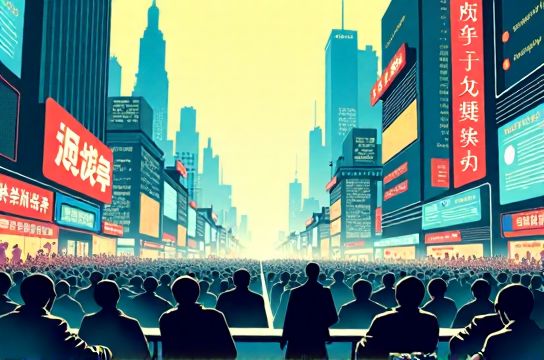
In the fast-paced digital era, China's internet culture has birthed a unique phenomenon: online buzzwords—short, catchy phrases that spread like wildfire across social media. But these aren’t just memes or jokes. Behind every viral term lies a powerful force shaping public opinion, reflecting societal moods, and sometimes even influencing policy.
The Power of a Single Word
From “neijuan” (involution) to “tang ping” (lying flat), Chinese netizens use buzzwords to express frustration, irony, and resistance. These terms often emerge from shared experiences—like workplace burnout or housing pressures—and quickly evolve into cultural shorthand.
Take “neijuan,” for example. Originally an academic term, it now describes the exhausting rat race in education and employment. A 2023 survey by Peking University found that 68% of urban youth identify with the term, seeing it as a critique of systemic overcompetition.
How Buzzwords Go Viral
Platforms like Weibo, Douyin, and Xiaohongshu act as launchpads. Once a phrase trends, it spreads through hashtags, videos, and parodies. Censorship may remove direct political commentary, but coded language slips through.
Consider “baixiaocai” (white vegetable), a metaphor for young people who feel powerless and plain. Or “emo”—borrowed from English but repurposed to mean sudden sadness in the face of life’s pressures.
Buzzwords as Social Barometers
These terms aren’t just slang—they’re signals. Researchers at Fudan University analyzed 1.2 million Weibo posts from 2021–2023 and found a strong correlation between rising buzzword usage and spikes in public concern over unemployment and mental health.
| Buzzword | Literal Meaning | Social Context | Peak Usage (Year) |
|---|---|---|---|
| 内卷 (neijuan) | Involution | Workplace/education pressure | 2021 |
| 躺平 (tang ping) | Lying flat | Anti-hustle culture | 2022 |
| 摆烂 (bai lan) | Letting it rot | Embracing failure | 2023 |
| 脆皮大学生 (fragile uni student) | Fragile college student | Poor health due to stress | 2023 |
From Slang to Mainstream
What’s fascinating is how quickly these words enter official discourse. In 2022, state media used “tang ping” in a cautionary article about youth motivation—proof that online sentiment can’t be ignored.
Brands also jump on the trend. Alibaba once used “buyu” (let’s go!) in a campaign targeting Gen Z, blending internet lingo with commerce.
The Flip Side: Censorship & Evolution
Of course, not all buzzwords survive. Some get censored; others mutate. “Xiǎo Zhèngjīng” (Little Pink) was once a derogatory term for ultra-nationalist youth but has been reclaimed and sanitized in some contexts.
This cat-and-mouse game shows how language adapts under pressure—netizens innovate faster than regulators can block.
Final Thoughts
Chinese online buzzwords are more than internet fads. They’re a form of digital resistance, emotional release, and collective identity. In a tightly controlled media environment, they offer a rare window into the public psyche.
So next time you see a strange phrase trending in China, don’t scroll past. It might just be the voice of a generation, speaking in code.