
Political Humor Navigated Through Metaphor in China
- Date:
- Views:235
- Source:The Silk Road Echo
In the intricate dance of expression and censorship, political humor in China has evolved into an art form—subtle, sharp, and often wrapped in metaphor. With direct criticism off-limits, netizens have turned to satire disguised as folklore, historical allegory, or even food memes. It’s a digital game of cat and mouse, where wit meets wisdom, and laughter becomes resistance.
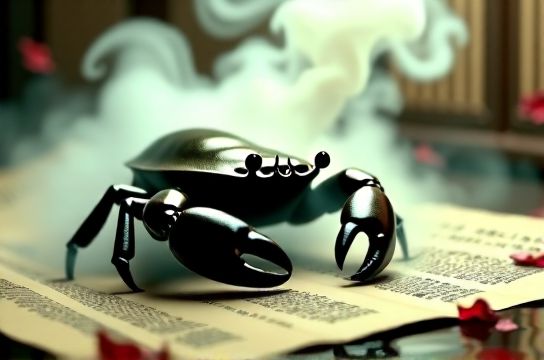
Take the rise of ‘river crab’ (河蟹, héxiè), a pun on ‘harmony’ (和谐, héxié). Originally a government slogan promoting social stability, netizens flipped it into a symbol of censorship—because, well, river crabs 'clip' things. This kind of wordplay isn’t just clever; it’s survival. According to a 2022 report by China Digital Times, over 60% of politically charged posts are deleted within three hours—yet metaphors linger longer, slipping past algorithms trained on literal keywords.
Another favorite? The use of historical figures. Emperor Qianlong’s lavish tours become stand-ins for modern leaders’ inspections. Tang Dynasty poets critique corruption through classical verse reposts. These analogies thrive because they’re culturally rich and legally ambiguous. As one Weibo user joked, ‘If Shakespeare can talk about power through kings, why can’t we?’
Animals also play a starring role. The ‘grass-mud horse’ (草泥马), sounding like a curse phrase, became an internet legend—a furry, llama-like creature defending its ‘protective grassland’ from pollution (read: censorship). Memes featuring this beast went viral, spawning cartoons, songs, and even fake documentaries. The message? Absurdity disarms authority.
To understand how deep this goes, consider this breakdown of common metaphors and their real-world parallels:
| Metaphor | Literal Meaning | Political Subtext | Platform Prevalence |
|---|---|---|---|
| River Crab | Freshwater crustacean | Censorship ('harmony') | Weibo, Douban |
| Grass-Mud Horse | Fictional animal | Resistance to suppression | Bilibili, Tieba |
| Qianlong Tours | Historical drama | Leadership inspections | WeChat Moments |
| Ants | Small insects | Overworked youth ('ant tribe') | Zhihu, Xiaohongshu |
| Peach Garden | Literary utopia | Desire for free speech | Private groups |
The genius lies in plausibility. If challenged, users can claim innocence: ‘I was just sharing a cute animal video!’ This duality empowers expression while offering deniability. A 2023 study from Hong Kong University found that metaphor-based posts stay online 4.2 times longer than direct commentary.
But it’s not all whimsy. Behind every meme is frustration—over inequality, surveillance, or silenced voices. Humor becomes a pressure valve. As one anonymous coder put it, ‘We don’t break rules; we bend them with jokes.’
Still, the state adapts. AI filters now detect context, not just words. ‘Harmony’ paired with crabs? Flagged. Tang poetry with trending hashtags? Monitored. Yet, creativity persists. New symbols emerge—like ‘blue cat,’ referencing a viral cartoon accused of ‘spreading negative energy.’
In the end, this metaphor-rich humor reflects a society navigating limits with intelligence and irony. It’s not rebellion—it’s resilience. And for those watching closely, the jokes tell a deeper story than any headline could.