
Internet Censorship and Creativity in Chinese Slang
- Date:
- Views:216
- Source:The Silk Road Echo
In the digital age, internet censorship might seem like a creativity killer. But in China, it’s sparked something unexpected: a linguistic renaissance. Faced with strict online regulations, netizens have turned restrictions into a playground of wit, crafting slang that dances around censors like a poetic backflip. This isn’t just rebellion—it’s linguistic innovation at its most vibrant.
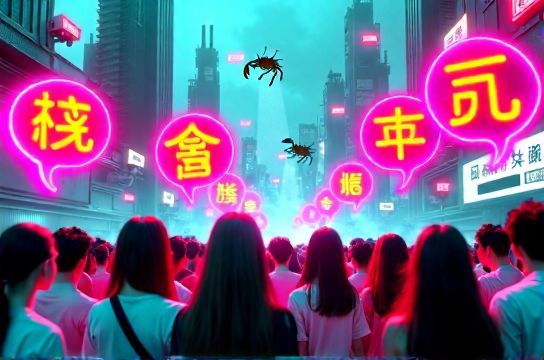
When direct words get flagged, creativity takes over. Take the word ‘democracy’—censored? No problem. Netizens call it ‘minzhuyi’ (民主议) or even use homophones like ‘grass mud horse’ (草泥马), a now-iconic meme that sounds like a profanity but translates to ‘f*** your mother’ in Mandarin. It’s absurd, hilarious, and genius—all while slipping past automated filters.
The game is simple: replace banned terms with puns, homophones, or visually similar characters. For instance, ‘404’ doesn’t just mean ‘page not found’—it’s become shorthand for content being censored. Saying ‘My post went 404’ instantly communicates suppression without naming names.
Why Does This Happen?
China’s Great Firewall blocks millions of sites and scans billions of posts daily. According to Citizen Lab, over 60 million websites are restricted. Yet, domestic platforms like Weibo and WeChat thrive—with one catch: self-censorship. Users adapt by encoding messages in humor, metaphor, and wordplay.
The Evolution of Coded Language
This isn’t new. During political movements, people used allegory and classical references to speak safely. Today’s version? Fast, viral, and meme-driven. Consider these examples:
| Original Term | Slang Substitute | Reason / Wordplay |
|---|---|---|
| Corruption | ‘Big melon’ (大瓜) | Homophone for ‘big event’; implies scandal |
| Government | ‘GM’ or ‘The Company’ | Avoids direct mention; ironic corporate metaphor |
| Censorship | ‘Harmonization’ (和谐) | Ironic twist on official term for censorship |
| Leader’s name | ‘XXX’ or ‘Certain Comrade’ | Avoids auto-detection algorithms |
This coded language isn’t just functional—it’s cultural. It builds community. When you understand ‘river crab’ (河蟹, sounds like ‘harmony’) means censorship, you’re part of the in-group. It’s linguistic resistance wrapped in sarcasm.
Impact on Creativity
Paradoxically, limits breed innovation. A 2022 study from Chinese University of Hong Kong found that users under higher censorship pressure generated 3x more metaphorical expressions than those in open environments. Constraints force cleverness.
Brands and influencers now tap into this slang. Ad campaigns use phrases like ‘Let’s be harmonious’ with a wink—knowing audiences read between the lines. Even state media occasionally echoes these terms, acknowledging their cultural weight.
Will It Last?
As AI moderation gets smarter, so do the workarounds. Emoji combinations, voice notes with tone shifts, and even fictional stories now carry hidden meanings. The cat-and-mouse game continues—but creativity remains one step ahead.
In the end, Chinese internet slang isn’t just about bypassing rules. It’s a testament to human ingenuity: when speech is constrained, language evolves. And sometimes, the most powerful statements aren’t shouted—they’re whispered in code, disguised as jokes, and shared with a smile.