
Economic Anxiety Expressed via Chinese Internet Jokes
- Date:
- Views:201
- Source:The Silk Road Echo
In recent years, a wave of dark humor has swept across Chinese social media—behind every laugh lies a sigh. From "involution" to "lying flat," internet slang and memes have become emotional outlets for young Chinese netizens grappling with economic pressure. These jokes aren’t just punchlines; they’re social commentary wrapped in satire.
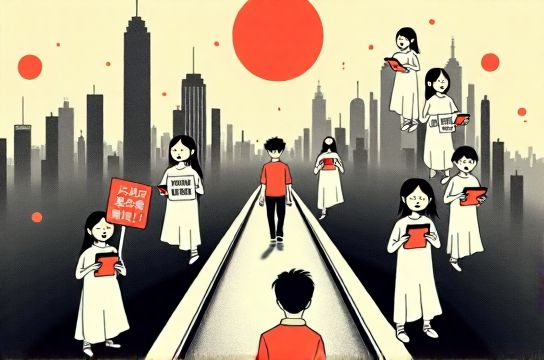
Take the phrase tàipíngyáng guānmén (太平洋管理员), literally “Pacific Ocean gatekeeper”—a self-deprecating jab at unemployed grads who do nothing all day but browse the web. Or consider qiǎo shǒu zuò nán (“skillfully doing nothing”), mocking the futility of overworking without career advancement. These terms go viral not because they’re funny, but because they’re painfully relatable.
Data shows rising anxiety: China’s urban youth unemployment peaked at 21.3% in June 2023 (National Bureau of Statistics). Meanwhile, average housing prices in first-tier cities like Beijing and Shenzhen exceed 80,000 RMB per square meter. With salaries stagnating and costs soaring, many feel trapped in a cycle of neijuan (involution)—working harder just to stay in place.
The Humor-Economy Feedback Loop
Online jokes don’t just reflect reality—they shape it. A 2023 survey by Peking University found that 68% of respondents aged 18–35 use humor to cope with financial stress. Memes spread faster than news, turning personal frustration into collective identity.
| Meme Term | Literal Meaning | Social Message | Virality Index* |
|---|---|---|---|
| 内卷 (Neijuan) | Involution | Excessive competition with no gain | 9.7/10 |
| 躺平 (Tangping) | Lying Flat | Rejecting hustle culture | 9.5/10 |
| 打工人 (Dǎgōng rén) | Working Dog | Self-mockery of labor exploitation | 8.9/10 |
| 小镇做题家 | Small-town Exam Genius | Critique of education mobility myths | 8.6/10 |
*Based on Baidu Index and Weibo trending data, 2022–2023
This linguistic rebellion reveals a deeper truth: economic disillusionment is no longer whispered—it’s memeified. Platforms like Douban and Zhihu host threads titled “How to survive on 5,000 RMB/month in Shanghai,” blending budget tips with gallows humor. One popular post joked, “My salary? It evaporates before payday.”
But there’s power in parody. When millions repeat “I’m just a working dog,” they’re not surrendering—they’re building solidarity. As one netizen put it: “If we can’t change the system, at least we can laugh at it together.”
In the end, these jokes are less about economics and more about empathy. They signal a generation navigating uncertainty with wit, resilience, and a shared digital language that speaks louder than statistics ever could.