
Social Commentary Hidden in Chinese Viral Content
- Date:
- Views:213
- Source:The Silk Road Echo
In recent years, China's digital landscape has exploded with viral content that, on the surface, seems all fun and memes. But look closer—behind the catchy dances and quirky skits lies sharp social commentary, cleverly disguised as entertainment. From short videos on Douyin (China’s TikTok) to satirical Weibo posts, internet users are using humor and metaphor to talk about real issues: income inequality, workplace pressure, urban loneliness, and generational divides.
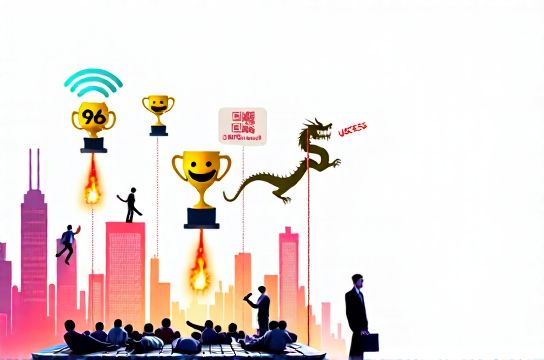
The Art of Subtle Critique
Why go subtle? Because direct criticism can be risky. Instead, creators use irony, exaggeration, and allegory. Take the "Lie Flat" (躺平) movement—a viral phrase turned lifestyle philosophy. It started as a response to China’s intense work culture, where "996" (working 9 AM to 9 PM, 6 days a week) is common. By posting videos of themselves doing nothing—sleeping, staring at walls, eating instant noodles—netizens protest burnout without saying it outright.
Data shows just how widespread this sentiment is:
| Metric | Data |
|---|---|
| Douyin views on #躺平 (Lie Flat) | Over 3.8 billion |
| Weibo posts with "996" in 2023 | 1.2 million+ |
| % of urban youth feeling work stress (Pew Research) | 74% |
| Average screen time on short video apps (CNNIC) | 140 mins/day |
Viral Characters as Cultural Mirrors
One standout example? The character "Xiao Mei," a fictional office worker played by comedian Jia Ling in sketches. She deals with low pay, nosy bosses, and unrealistic family expectations. Audiences laugh—but also see their lives reflected. Another hit: the "Fake Rich" trend, where people dress in luxury brands but live in tiny apartments, mocking materialism and social climbing.
These aren’t just jokes—they’re collective coping mechanisms. As one Zhihu user put it: "We can’t change the system, so we meme it to death."
Platform Dynamics & Censorship Dodge
Platforms like Douyin and Bilibili walk a fine line. They promote content that aligns with state values but can’t fully suppress grassroots expression. Clever creators exploit this. For instance, using homophones or historical references to bypass keyword filters. The term "River Crab" (谐音: He Xie), for example, sounds like "harmony"—a nod to censorship itself.
This cat-and-mouse game fuels creativity. A 2023 study by Tsinghua University found that 68% of top-viral videos contained indirect social themes, up from 49% in 2020.
Global Lessons in Digital Resistance
What can the world learn? That even in tightly regulated spaces, people find ways to speak up. Chinese netizens aren’t breaking rules—they’re bending them with wit and style. Their viral content isn’t just entertainment; it’s a form of soft resistance, building solidarity through shared frustration.
So next time you see a silly dance or a noodle-eating stream, don’t scroll past too fast. There might be a message hiding in plain sight—one that says, "We’re tired, we’re aware, and we’re not alone."