
Decoding Popular Chinese Buzzwords on Social Media
- Date:
- Views:257
- Source:The Silk Road Echo
Ever scrolled through Chinese social media and felt like everyone’s speaking a secret code? You’re not alone. From Weibo to Xiaohongshu, netizens are tossing around phrases that sound like nonsense—until you crack the code. Let’s dive into the wild world of Chinese internet slang, where memes meet meaning and absurdity hides wisdom.
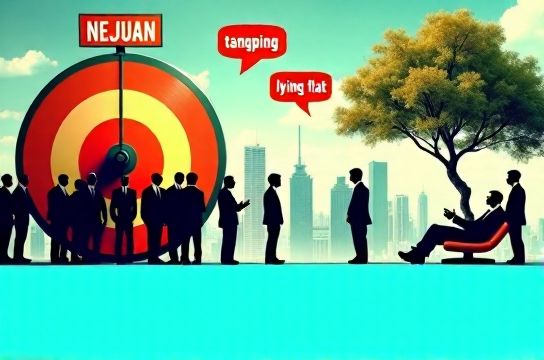
Why Do Chinese Netizens Love Buzzwords?
China’s online population exceeds 1.05 billion, and with strict content controls, users get creative. Slang becomes a linguistic backdoor—funny, fast, and often politically veiled. These buzzwords spread like wildfire, fueled by humor, satire, and shared frustration.
Top 5 Must-Know Chinese Internet Slang (2024)
Here’s your cheat sheet to sounding like a local:
| Buzzword | Literal Meaning | Actual Use | Example Context |
|---|---|---|---|
| 内卷 (nèijuǎn) | Involution | Relentless competition with no real gain | “Working 80-hour weeks for a promotion? Total nèijuǎn.” |
| 躺平 (tǎngpíng) | Lying flat | Rejecting societal pressure to hustle | “I quit my job to grow tomatoes. I’m tǎngpíng now.” |
| 摆烂 (bǎilàn) | Letting it rot | Embracing failure with zero effort | “My project is trash. Might as well bǎilàn.” |
| 社死 (shèsǐ) | Social death | Extreme embarrassment in public | “Tripped in front of my crush—total shèsǐ moment.” |
| 破防 (pòfáng) | Breach defense | Emotionally overwhelmed | “That puppy video made me pòfáng.” |
The Rise of ‘Lying Flat’ and ‘Involution’
Nèijuǎn and tǎngpíng aren’t just jokes—they’re cultural movements. A 2023 survey found that 67% of urban millennials feel trapped in overwork cycles. In response, “lying flat” went viral as a form of quiet rebellion. It’s not laziness; it’s self-preservation.
Meanwhile, nèijuǎn describes systems where everyone works harder but gains nothing. Think students cramming 16-hour days just to edge past peers. It’s burnout dressed as ambition.
How to Use These Words Like a Pro
- Be ironic: Say “I’m totally tǎngpíng” while sending work emails at midnight.
- Keep it light: Use shèsǐ after spilling coffee, not during actual crises.
- Know the audience: Bosses might not appreciate bǎilàn in performance reviews.
Final Thoughts
Chinese internet slang isn’t just trendy—it’s a mirror of society. Behind every meme is a story of stress, humor, and resistance. So next time you see pòfáng or tǎngpíng, remember: it’s more than a word. It’s a vibe.
Master these terms, and you won’t just understand the lingo—you’ll get the culture.