
Censorship and Innovation in Meme Culture China
- Date:
- Views:226
- Source:The Silk Road Echo
In the digital age, meme culture has become a universal language of youth expression, humor, and social commentary. Nowhere is this more fascinating than in China, where internet censorship shapes — but doesn’t stifle — creativity. Despite strict regulations, Chinese netizens have turned limitations into a playground of linguistic wit, visual puns, and coded satire. Welcome to the paradox: the tighter the censorship, the wilder the memes.
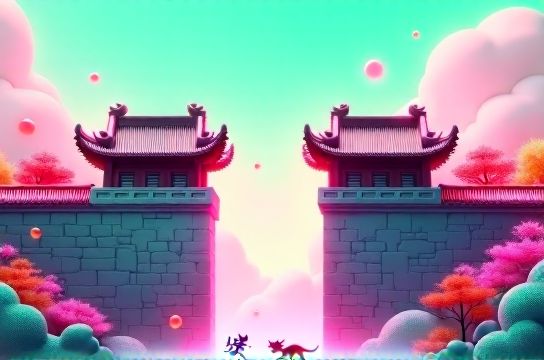
The Great Firewall Meets Grassroots Creativity
China’s internet is one of the most regulated in the world. According to a 2023 report by Freedom House, China scored just 18 out of 100 on internet freedom — the lowest globally. Yet, paradoxically, it’s also home to over 1 billion netizens producing some of the most inventive online content on the planet.
So how do memes thrive under such conditions? The answer lies in adaptation. When direct speech is risky, users turn to homophones, surreal imagery, and absurdism to convey meaning. For example, instead of saying politically sensitive terms, people use phonetic equivalents like “hexie” (harmony), a euphemism for censorship itself — referencing the government’s call for a “harmonious society.”
Meme Tactics: From Puns to Pandas
Chinese memes often rely on wordplay rooted in Mandarin’s tonal nature. Homophones are gold. Take “cao ni ma” — an insult that literally means “grass mud horse,” but sounds nearly identical to a vulgar phrase. This led to the rise of the Grass Mud Horse, a fictional creature that became a symbol of resistance through absurdity.
Platforms like Weibo, Bilibili, and Douyin (TikTok’s Chinese cousin) are breeding grounds for these inside jokes. Emojis, anime filters, and even pandas wearing sunglasses morph into political metaphors. It’s not rebellion with banners — it’s rebellion with cuteness.
Data Snapshot: Meme Resilience in a Controlled Space
Despite over 10,000 new censorship rules issued annually, meme production soars. Check this out:
| Year | Active Net Users (Billion) | Top Meme Formats | Censorship Incidents (Est.) |
|---|---|---|---|
| 2020 | 0.986 | Voice filters, Emoji combos | ~7,500 |
| 2021 | 1.03 | Anime edits, Doge remixes | ~8,200 |
| 2022 | 1.05 | AI-generated absurdism | ~9,100 |
| 2023 | 1.08 | Deepfake satire, Sound memes | ~10,300 |
Notice the trend? As censorship increases, so does creative output. It’s a digital game of whack-a-mole — except the moles are now wearing masks and quoting ancient poetry.
The Role of Platforms
Bilibili, known for its danmu (bullet comments) system, lets users flood screens with real-time reactions — often turning videos into collaborative meme art. Meanwhile, WeChat groups operate as semi-private meme vaults, where content spreads virally before censors catch up.
Yet innovation isn’t just about evasion. It’s about redefining communication. A 2022 study from Tsinghua University found that 68% of urban Chinese youth interpret memes as a form of social critique — more trusted than traditional media.
Conclusion: Censored But Not Silenced
Meme culture in China proves that creativity flourishes even in confinement. What starts as suppression often ends as satire, wrapped in emojis and irony. In this space, a panda isn’t just cute — it’s a cipher. A duck emoji isn’t random — it’s resistance.
So next time you see a bizarre image of a flaming raccoon or a dancing bureaucrat, remember: behind the absurdity is a message, cleverly disguised, quietly powerful. That’s the genius of meme culture in China — where every joke is a quiet act of defiance.