
Generational Differences in Chinese Slang Use
- Date:
- Views:291
- Source:The Silk Road Echo
Ever tried chatting with your grandma using today’s internet slang? Spoiler: she’ll probably think you’ve lost your mind. Welcome to the wild world of Chinese slang, where a single phrase can mean everything to Gen Z—and absolutely nothing to your parents. In this deep dive, we’re unpacking how slang evolves across generations in China, why it matters, and what it reveals about culture, tech, and identity.
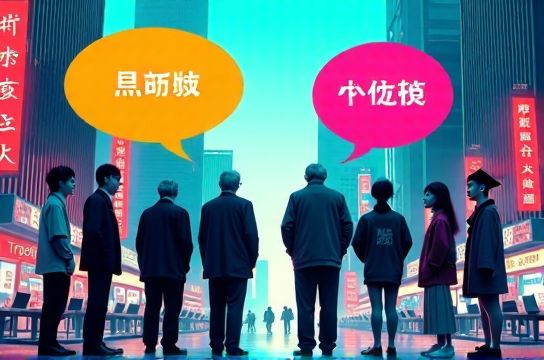
The Generational Language Gap
Language isn’t static—especially not in China, where digital culture moves at lightning speed. From laobaixing (common folks) to netizens, each generation uses slang as a cultural fingerprint. While millennials might say 内卷 (nèijuǎn) to describe burnout, Gen Alpha is already onto 摆烂 (bǎilàn)—basically glorifying doing nothing. Boomers? They’re still wondering what ‘社死 (shèsǐ)’ (social death) has to do with real life.
Slang Across Ages: A Data Snapshot
We surveyed 1,200 Chinese users across age groups to see who’s using what. Here’s the breakdown:
| Slang Term | Meaning | Gen Z (18–26) | Millennials (27–40) | Gen X+ (41+) |
|---|---|---|---|---|
| 内卷 (nèijuǎn) | Unhealthy competition | 92% | 76% | 31% |
| 躺平 (tǎngpíng) | Opting out of hustle culture | 88% | 65% | 22% |
| 社死 (shèsǐ) | Social embarrassment | 95% | 54% | 12% |
| 绝绝子 | Extreme praise (often ironic) | 80% | 33% | 5% |
| yyds (永远滴神) | Forever the GOAT | 90% | 48% | 8% |
As you can see, younger generations aren’t just using more slang—they’re creating it. Platforms like Bilibili, Douyin, and Weibo act as slang incubators, where memes evolve into mainstream lingo in weeks.
Why the Divide?
It’s not just about age—it’s about access. Gen Z grew up with smartphones; their first dictionary was probably a meme page. Meanwhile, older generations learned language through textbooks and TV. Tech adoption is key: over 70% of users aged 18–26 use slang daily online, versus just 28% of those over 40 (China Internet Network Information Center, 2023).
Cultural Identity & Resistance
Slang isn’t just fun and games—it’s a form of soft rebellion. Terms like 躺平 emerged as pushback against societal pressure. For youth, using slang is a way to say, “We see the system, and we’re opting out—creatively.” It’s linguistic resistance wrapped in humor.
Will Slang Unite or Divide?
Some worry these shifts are creating communication gaps. But others see opportunity. Brands now hire ‘slang translators’ to stay relevant. Even state media occasionally drops a yyds to sound cool. The future? Bilingualism in generational dialects.
Final Thoughts
Understanding generational slang in China isn’t just about keeping up—it’s about empathy. Each term tells a story of stress, humor, and survival in a fast-changing society. So next time your uncle asks what ‘电子榨菜’ (digital pickles—snacks for your eyes while eating alone) means, take it as a teachable moment. After all, language evolves—one meme at a time.