
How Chinese Internet Slang Reflects Youth Culture
- Date:
- Views:252
- Source:The Silk Road Echo
If you've ever scrolled through a Chinese social media feed and felt like everyone was speaking a secret code, you're not alone. From zui fan (最烦, 'most annoyed') to neijuan (内卷, 'involution'), Chinese internet slang isn't just playful lingo — it's a cultural mirror reflecting the hopes, frustrations, and humor of China’s youth.
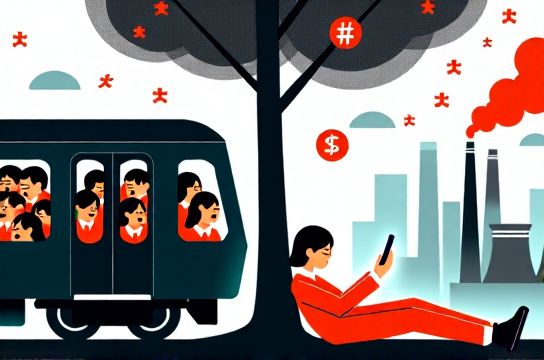
With over 1 billion internet users in China, much of today’s digital discourse is shaped by Gen Z and millennials. These digital natives aren’t just consuming content — they’re creating a new linguistic identity. And at the heart of it? Internet slang that packs emotional punch, social critique, and meme-worthy wit into just one or two characters.
Take '996', for example. On the surface, it sounds like a model number. But in reality, it refers to the grueling work schedule of 9 AM to 9 PM, six days a week. This term exploded online after a GitHub protest in 2019 and has since become a symbol of workplace burnout. It’s not just slang — it’s silent rebellion.
Another rising star? 'Tangping' (躺平), meaning 'lying flat'. It describes a lifestyle rejecting societal pressure to overwork and overachieve. In a society where success is often measured by material gain, 'tangping' represents a quiet but powerful pushback. According to a 2022 survey by iResearch, 68% of urban youth aged 18–30 admitted to feeling 'burned out', making 'tangping' more than a trend — it’s a movement.
Then there’s 'Neijuan' (内卷), or 'involution'. Imagine studying 14 hours a day only to find everyone else is studying 15. That’s neijuan — endless competition with diminishing returns. A 2023 Peking University study found that 74% of college students felt trapped in academic 'neijuan', using the term in over 3 million social media posts that year alone.
Popular Chinese Internet Slang & Meanings
| Slang Term | Literal Meaning | Cultural Significance | Usage Growth (2020–2023) |
|---|---|---|---|
| 内卷 (Neijuan) | Involution | Hyper-competition with no real progress | +320% |
| 躺平 (Tangping) | Lying flat | Rejecting societal pressure | +410% |
| 打工人 (Dǎgōng rén) | Working stiff | Sarcastic self-identity of wage earners | +280% |
| 社死 (Shèsǐ) | Social death | Extreme embarrassment | +190% |
| 破防 (Pòfáng) | Breach defense | Emotionally overwhelmed | +350% |
These terms aren’t just viral — they’re vessels of emotion and resistance. They thrive on platforms like Weibo, Xiaohongshu, and Bilibili, where irony and creativity rule. For instance, calling yourself a dagongren (打工仔, 'laborer') while sipping bubble tea isn’t literal — it’s satire with a side of self-awareness.
In essence, Chinese internet slang is more than shorthand. It’s a coded language of survival, identity, and subtle defiance. As youth navigate intense academic, economic, and social pressures, their words evolve — sharp, clever, and deeply human.
So next time you see 'zzz' in a Chinese chat (meaning 'sleeping to escape reality'), remember: behind every meme is a generation finding its voice.