
Laughing Behind the Firewall: Exploring Meme Culture China Under Censorship
- Date:
- Views:1335
- Source:The Silk Road Echo
In a digital world where freedom of expression often clashes with state control, one might assume that humor would be the first casualty under strict censorship. But in China, internet users have turned limitations into creativity—fueling a thriving, subversive meme culture that dances just beyond the watchful eyes of the Great Firewall.
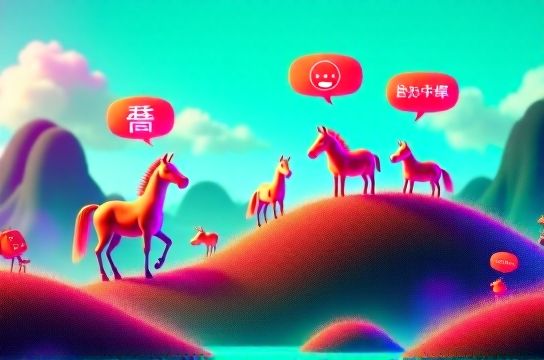
Chinese netizens aren’t breaking rules—they’re rewriting them, using irony, wordplay, and surreal imagery to laugh with the system, even as they poke fun at it. From "diaosi" (a self-deprecating term for 'loser') to the rise of doge-like figures such as the "Grass Mud Horse," memes in China are more than jokes—they’re social commentary wrapped in absurdity.
Take the infamous "Grass Mud Horse," a pun on a phrase that sounds like a vulgar insult but refers to a fictional alpaca-like creature. This meme exploded in the late 2000s as a form of linguistic rebellion. According to China Digital Times, over 1 million references to the Grass Mud Horse appeared online before censors cracked down—proof of how quickly satire spreads, even under pressure.
But it’s not all coded animals. Platforms like Weibo, Douyin (TikTok’s Chinese cousin), and Bilibili have become meme incubators. Unlike Western meme formats that rely heavily on text or pop culture references, Chinese memes thrive on visual puns, homophones, and layered meanings that evade keyword filters.
Why Memes Work Under Censorship
Censorship algorithms scan for blacklisted keywords. Clever netizens bypass them using:
- Homophonic substitutions (e.g., “hexie” for “harmony,” which also sounds like “river crab,” symbolizing censorship)
- Emoji mashups
- AI-generated absurdism (think: pandas wearing sunglasses riding rockets)
This linguistic gymnastics isn’t just survival—it’s art. A 2023 study by the University of Hong Kong found that 68% of urban Chinese internet users aged 18–35 engage with politically tinged memes at least weekly, often sharing them in private chat groups or disguised as entertainment.
Meme Platforms & Reach Compared
| Platform | Monthly Active Users | Meme Type Dominance | Censorship Evasion Tactics |
|---|---|---|---|
| 580 million | Viral image macros | Timed posts, hashtag variations | |
| Douyin | 750 million | Short video remixes | Satirical skits with allegory |
| Bilibili | 330 million | Anime-inspired memes | Subcultural jargon, voice distortion |
| WeChat Moments | 1.2 billion | Private group humor | Image-only sharing, inside jokes |
As shown, platforms with higher privacy (like WeChat) enable bolder content, while public spaces like Weibo rely on speed and misdirection. The average lifespan of a sensitive meme? Just 2–6 hours before deletion—making virality a race against time.
Yet, this cat-and-mouse game hasn’t dampened creativity. If anything, it’s intensified it. Memes like "Winnie the Pooh meets Xi Jinping" (now heavily suppressed) showed how global icons could be repurposed—until image recognition AI caught up.
The Future of Chinese Internet Humor
With AI moderation tightening, memes are evolving. Deepfake parodies, generative art, and absurdist livestreams now carry the torch. As one Zhihu user put it: “When words are dangerous, we draw nonsense. When images are flagged, we laugh in emojis.”
So yes, censorship exists—but so does laughter. In China’s digital underground, memes aren’t just jokes. They’re acts of quiet resistance, proof that even behind a firewall, humor finds a way to slip through the cracks.