
The Dark Humor of ‘Suibian Ba’ in Today’s Stressed-Out Chinese Society
- Date:
- Views:230
- Source:The Silk Road Echo
In today’s fast-paced China, where hustle culture reigns and social pressures pile up like unpaid bills, a single phrase has become the sarcastic mantra of a generation: "Suibian ba." Roughly translated as "Whatever," or "I don’t care," this offhand expression is far more than linguistic laziness—it’s a cultural sigh, a shield against burnout, and a quiet rebellion wrapped in apathy.
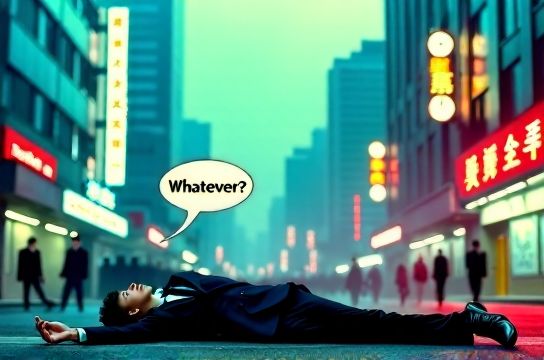
But why has a seemingly indifferent phrase become so deeply embedded in daily conversation? Let’s dive into the psychology, sociology, and dark humor behind Suibian ba, and explore how it reflects the emotional exhaustion of modern urban Chinese life.
The Rise of Emotional Detachment
According to a 2023 survey by Peking University, over 68% of young professionals in first-tier cities report symptoms of chronic stress, with work-life balance ranked as their top concern. In this context, Suibian ba isn’t indifference—it’s self-preservation.
When asked to choose a restaurant for dinner, a colleague might shrug and say, "Suibian ba," but what they’re really saying is: "I’ve made 47 decisions today, from KPI reports to family expectations—can I please opt out of choosing noodles vs. rice?"
From Slang to Survival Strategy
The phrase has evolved beyond casual speech. It’s now a meme, a fashion slogan, and even a philosophical stance. On Xiaohongshu and Weibo, posts tagged #随便吧 have racked up over 150 million views, often paired with ironic images of people lying flat on office floors or staring blankly at Excel sheets.
This isn’t just humor—it’s catharsis. By laughing at their own helplessness, young Chinese are reclaiming agency in a system that offers little control.
Data Behind the Disengagement
Consider these findings from recent studies:
| Indicator | Statistic | Source |
|---|---|---|
| Youth (18–35) reporting high stress | 68% | Peking University, 2023 |
| Daily average work hours (urban workers) | 9.2 hrs | NBS, 2022 |
| Who use 'Suibian ba' weekly | 74% | Tencent Youth Survey, 2023 |
| Believe 'lying flat' is understandable | 59% | Caixin Insight Group |
These numbers paint a clear picture: disengagement isn’t apathy—it’s a response to overload.
The Irony of Choice
Ironically, China’s economic rise has brought more choices than ever—career paths, consumer goods, lifestyle models. But with freedom comes fatigue. Psychologists call this "decision paralysis," and Suibian ba is the verbal escape hatch.
It’s not that people don’t care about outcomes—they’re just too drained to fight every small battle. As one Shanghai office worker put it: "If I have to optimize every decision, I’ll collapse. So I say ‘suibian’ and save my energy for surviving Friday.”
Cultural Nuance: Not Laziness, But Resilience
To outsiders, Suibian ba might sound defeatist. But in context, it’s nuanced. It’s not giving up—it’s strategic surrender. Like a pressure valve releasing steam, it allows people to keep functioning without exploding.
In a society that glorifies endurance (‘neng qu’ – “can endure”), saying Suibian ba is a subtle act of resistance. It says: I’m still here, but I won’t pretend everything’s fine.
Conclusion: The Quiet Roar of 'Whatever'
So next time you hear someone mutter Suibian ba, don’t mistake it for indifference. It’s a whisper of weariness, a joke with tears behind it, and perhaps the most honest four syllables in modern Chinese conversation.
In a world that demands constant performance, sometimes the most powerful statement is: …whatever.