
'Involution' or 'Lying Flat'? Interpreting China’s Social Backlash Through Online Buzzwords
- Date:
- Views:274
- Source:The Silk Road Echo
In recent years, two viral Chinese internet terms have sparked nationwide debate: neijuan (内卷), or 'involution,' and tangping (躺平), meaning 'lying flat.' These aren't just slang—they're social manifestos reflecting a generation's quiet rebellion against relentless competition. From overworked tech employees to college grads drowning in student debt, young Chinese are redefining success in an era of shrinking opportunities.
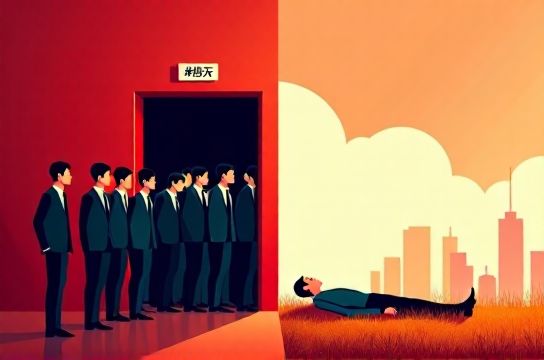
'Involution' originally described agricultural economies where increased labor didn’t yield better results. Today, it symbolizes a rat race where everyone works harder but no one wins. A 2023 survey by Zhaopin.com found that 67% of urban white-collar workers feel trapped in 'neijuan,' with average weekly working hours reaching 48.6—12% above the legal limit.
| Metric | 2020 | 2023 |
|---|---|---|
| Avg. Weekly Work Hours | 43.2 | 48.6 |
| Youth Unemployment Rate (%) | 12.1 | 21.3 |
| Home Price-to-Income Ratio (Tier-1 Cities) | 24:1 | 31:1 |
Faced with these pressures, many choose 'tangping'—opting out of societal expectations. It’s not laziness; it’s a survival tactic. Think minimal work, modest living, zero ambition. As one Weibo user put it: 'I’d rather sleep than slave for a house I can never afford.'
The government hasn’t stayed silent. State media once criticized 'lying flat' as 'selfish,' but public backlash forced a pivot. Now, policies promoting work-life balance and affordable housing are gaining traction. Yet real change is slow.
So what does this mean for China’s future? A society built on growth may struggle to accept withdrawal as resistance. But for millions, 'lying flat' isn’t defeat—it’s dignity.