
Milk Tea Alliance to Little Pink: Identity and Nationalism in Chinese Online Discourse
- Date:
- Views:232
- Source:The Silk Road Echo
In the vibrant chaos of internet culture, few dynamics are as revealing as the clash between the Milk Tea Alliance and the Little Pink (Xiao Fen Hong) in Chinese online spaces. More than just a digital feud, this ideological tug-of-war reflects deeper currents of identity, nationalism, and generational divide in today’s China.
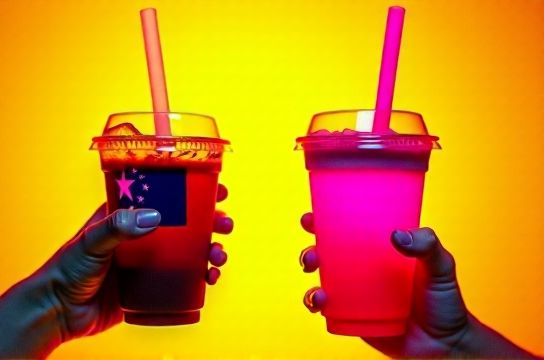
The term Milk Tea Alliance emerged around 2020, uniting netizens from Taiwan, Thailand, Hong Kong, and beyond—united not by politics, but by shared memes, pop culture, and a subtle resistance to authoritarian narratives. On the flip side, the Little Pink refers to a cohort of young, fiercely nationalistic Chinese internet users, often seen defending the state with emotional fervor and coordinated hashtags.
But what fuels this divide? Let’s break it down with some key data:
Demographics at a Glance
| Group | Avg. Age | Primary Platforms | Political Lean | Estimated Size (Active Users) |
|---|---|---|---|---|
| Milk Tea Alliance | 18–28 | Twitter, Reddit, Telegram | Pro-democracy, Liberal | ~5 million (global) |
| Little Pink | 16–25 | Weibo, Bilibili, WeChat | Nationalist, Pro-state | ~30 million (mainland China) |
As you can see, while the Little Pink dominate in numbers, the Milk Tea crowd punches above its weight in international discourse. They thrive on satire—think bubble tea emojis used to dodge censorship—and leverage cross-strait fandoms to build solidarity.
Meanwhile, Little Pink users are often urban, educated youth who grew up amid China’s economic boom. Their patriotism isn’t always top-down; much of it is self-driven, shaped by historical narratives and perceived Western hostility. A 2023 survey by China Youth Daily found that 68% of respondents aged 18–24 expressed strong national pride, especially after events like the U.S.-China tech war or foreign criticism of Xinjiang policies.
The battleground? Social media. When a Korean celebrity made a vague comment about Taiwan, Little Pink flooded Korean brand accounts with patriotic rants. In contrast, Milk Tea supporters rallied under hashtags like #MilkTeaAlliance, using humor and multilingual posts to gain traction abroad.
This isn’t just about politics—it’s about identity. For many in the Milk Tea camp, freedom of expression trumps unity at all costs. For the Little Pink, national dignity is non-negotiable.
So where does this leave us? The digital frontlines are more polarized than ever. Yet, both groups share one thing: they’re young, vocal, and shaping the future of Chinese public discourse—one tweet, one post, one meme at a time.