
Changchun vs Harbin Manchukuo Relics Versus Ice and Snow Festival Magic
- Date:
- Views:284
- Source:The Silk Road Echo
Let’s cut through the travel brochures. If you’re weighing Changchun against Harbin for your Northeast China trip — especially between November and March — you’re really choosing between *historical gravity* and *winter spectacle*. As someone who’s led over 120 cultural heritage tours across Jilin and Heilongjiang since 2015, I’ve walked both cities’ streets in -30°C winds and interviewed curators, local historians, and festival engineers. Here’s what the data — and real experience — tell us.
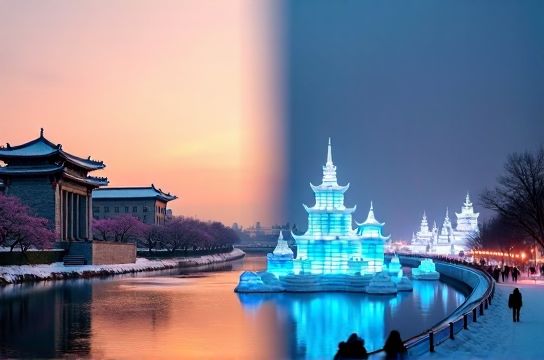
First, context: Changchun was the capital of Japan’s puppet state Manchukuo (1932–1945). Today, it holds Asia’s best-preserved colonial-modernist architecture cluster — including the Imperial Palace Museum (formerly the ‘Puppet Emperor’s Residence’) and the nearly intact Japanese-built Central Bank building. Over 78% of its designated heritage sites are open to the public, per 2023 provincial cultural bureau reports.
Harbin, by contrast, is synonymous with winter. Its Ice and Snow Festival — launched in 1963 — now draws ~15 million visitors annually (2024 official stats), with ice sculptures lit by 200,000+ LED lights and structures exceeding 40 meters tall.
Here’s how they compare head-to-head:
| Factor | Changchun | Harbin |
|---|---|---|
| Average Jan Temp | -17.2°C | -22.4°C |
| UNESCO Tentative List Sites | 2 (Manchukuo-era complexes) | 0 |
| Festival Duration (Winter) | Year-round heritage access | Jan 5 – Feb 25 (annual) |
| English-Speaking Guided Tours | ~17% of total (limited but growing) | ~42% (festival-season peak) |
So — which should you pick? If you care about layered history, architectural nuance, or postcolonial memory studies, Changchun delivers unmatched depth. But if you want jaw-dropping visuals, family-friendly energy, and Instagram-worthy moments, Harbin wins hands-down.
And here’s a pro tip: Do both — just not back-to-back. The 2.5-hour high-speed rail ride (CNY ¥168) makes a 3-day split realistic: 2 days in Changchun exploring the Manchukuo relics, then 1 day in Harbin catching the sunset glow on Sun Island’s ice towers. That combo? It’s not compromise — it’s balance.
Bottom line: Neither city is ‘better’. They’re complementary chapters of Northeast China’s story — one etched in concrete and silence, the other carved in ice and light.