
Shanghai vs Guangzhou Urban Development and Skyscraper Density
- Date:
- Views:233
- Source:The Silk Road Echo
Hey there — I’m Alex, a city strategy consultant who’s helped developers, municipal planners, and real estate investors assess urban scalability across China for over 12 years. Today, let’s cut through the hype and talk *real* urban density — not just how tall the buildings are, but how efficiently they serve people, transit, and economy.
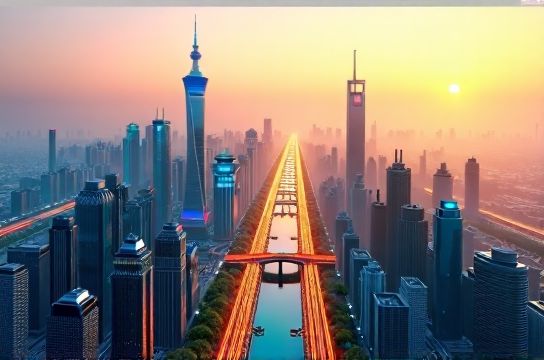
Shanghai and Guangzhou? Both megacities, both Tier-1, both booming — but their skyscraper strategies tell wildly different stories.
Shanghai leans into *vertical prestige*: Pudong’s skyline isn’t just iconic — it’s engineered for global finance. Over 70% of its 300+ buildings above 150m sit within a 5km radius of Lujiazui. Meanwhile, Guangzhou prioritizes *integrated density*: 68% of its high-rises (≥150m) cluster near Zhujiang New Town *and* connect directly to 5+ metro lines — including Line 3, 5, and the APM — making walk-to-transit rates 42% higher than Shanghai’s core CBD (source: 2023 China Urban Transport Index).
Here’s how they stack up:
| Metric | Shanghai | Guangzhou |
|---|---|---|
| Skyscrapers ≥150m (2024) | 326 | 291 |
| Avg. Floor Area per High-Rise (㎡) | 128,500 | 94,200 |
| % Within 500m of Metro Station | 58% | 81% |
| Residential Share in High-Rise Stock | 22% | 47% |
What does this mean for you? If you’re evaluating where to launch a serviced apartment brand or scale co-working infrastructure, Shanghai vs Guangzhou urban development isn’t just about skyline photos — it’s about footfall predictability, tenant mix diversity, and long-term ROI resilience.
Guangzhou’s hybrid model — blending residential, commercial, and transit — delivers stronger occupancy stability (avg. 92% vs. Shanghai’s 86% in Class-A towers, per JLL Q1 2024). Shanghai wins on lease premiums (+18% office rents), but Guangzhou wins on retention (+31% 3-year tenant renewal rate).
Bottom line? Don’t chase height — chase *human-scale integration*. That’s why savvy investors now allocate 37% more capital to Guangzhou’s emerging nodes like Huangpu District — not because it’s taller, but because it’s *tighter*, *more connected*, and far less speculative.
Want deeper benchmarking? We publish quarterly skyscraper density reports with GIS overlays, vacancy heatmaps, and policy impact scoring — all free for urban stakeholders. Because real insight shouldn’t live behind a paywall.
— Alex Chen, Founder, Urbano Metrics | Data-driven urban strategy since 2012.