
Beijing Hutongs vs Shanghai Lanes Traditional Living Compared
- Date:
- Views:262
- Source:The Silk Road Echo
If you've ever wandered through the winding alleyways of Beijing or zigzagged your way through Shanghai’s hidden entrances, you know — these cities don’t just differ in skyline. The real soul lives in their traditional neighborhoods: Beijing’s hutongs and Shanghai’s lilongs (lanes). But which offers a more authentic, livable, or culturally rich experience? Let’s break it down with real insights, not just travel brochure fluff.
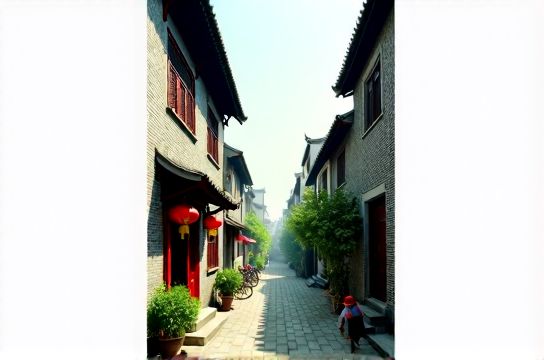
First, what even *are* hutongs and lilongs? Hutongs are narrow alleys formed by lines of siheyuan, traditional courtyard residences, mostly built during the Yuan, Ming, and Qing dynasties. In contrast, Shanghai’s lilongs are 19th–20th century lane houses, blending Chinese and Western architectural styles — think Shikumen (stone gate) buildings with European façades and compact layouts.
Let’s look at some hard data:
| Feature | Beijing Hutongs | Shanghai Lilongs |
|---|---|---|
| Average Age | ~700 years (oldest) | ~100–150 years |
| Typical Layout | Courtyard-centered, linear alleys | Dense rows, shared walls, lane access |
| Floor Area Ratio (FAR) | 0.8–1.2 | 2.0–3.0 |
| Population Density (per km²) | ~28,000 | ~45,000 |
| Tourist Foot Traffic (avg/day) | 12,000–18,000 (Nanluoguxiang) | 8,000–12,000 (Tianzifang) |
What does this mean for you as a visitor or potential resident? Hutongs offer deeper historical roots — many date back to the 13th century. But they’re also less dense and often quieter, especially outside tourist hotspots like Nanluoguxiang. On the flip side, Shanghai’s lilongs were designed for urban efficiency. Their higher FAR and density reflect a city built for commerce and modern living, even over a century ago.
Culturally, hutongs emphasize community and family hierarchy — the courtyard was the heart of social life. Lilongs, influenced by colonial trade, fostered a more private, compartmentalized lifestyle. That’s why you’ll find more cafes, boutiques, and art studios tucked into Shanghai’s lanes — they’ve adapted better to modern creative economies.
Now, let’s talk livability. A 2022 Tsinghua University study found that residents in preserved hutong zones reported higher life satisfaction (7.6/10) than those in high-rises, citing stronger neighborhood bonds. Meanwhile, Shanghai’s Xintiandi redevelopment — a gentrified lilong zone — saw property values jump 300% post-renovation, but long-term residents dropped by 68%. Gentrification hits different.
So, is one better? Not really. It depends on what you value: ancient heritage and communal vibes (Beijing hutongs) or adaptive reuse and urban chic (Shanghai lanes). Both are endangered by development, but also celebrated through smart preservation.
Pro tip: Skip the crowded main lanes. In Beijing, head to **Blind Lane (Wangfujing area)** for quiet authenticity. In Shanghai, explore **Jianye Li** near Fuxing Park — locals still hang laundry from windows, and bakeries sell fresh *wujiang bing* at dawn.
Bottom line? These aren’t just old streets. They’re living blueprints of how Chinese cities evolved — one courtyard, one lane at a time.